
 Contact
  Account


If you’re researching a move to Mexico, healthcare is probably near the top of your list of concerns.
And it should be.
You can fall in love with a city. You can fall in love with the lifestyle. But if you don’t understand how medical care actually works here, that’s where people get surprised — and sometimes those surprises are expensive.
The good news is this: healthcare in Mexico can be excellent. In many cases, it’s more accessible, more personal, and far more affordable than what you’re used to in the United States. And for Canadians, it can mean not waiting months to see a specialist.
But here’s the honest truth: healthcare in Mexico is not one-size-fits-all. It depends on where you live, how you plan, what your health looks like today, and how prepared you are for the unexpected.
Let’s walk through this the right way.

How the Mexican Healthcare System Works
Mexico has a mixed public-private healthcare system. That’s important to understand from the beginning.
You essentially have four ways to receive medical care in Mexico:
- Pay Out of Pocket (no insurance)
- Private Health Insurance
- IMSS (Public Social Security Healthcare)
- Optional to some- Medicare Advantage (Emergency Coverage for eligible Americans outside of the USA)
Each option works very differently. And most expats end up using a combination of these.
If you would rather watch a video, I made a quick presentation of this topic.

Note: this blog is for information purposes only. I am neither a doctor nor an insurance agent in Mexico. Please talk with a doctor for any medical advice.
Is Healthcare in Mexico Actually Good?
In larger cities, yes, absolutely.
Private hospitals in places like Mexico City, Guadalajara, Monterrey, Querétaro, Mérida, and San Luis Potosí are modern, well-equipped, and often internationally accredited. Many doctors have trained abroad. Consultations are unhurried. You can communicate directly with your doctor through WhatsApp.
You are treated like a person, not a billing code.
This is one of the reasons so many retirees tell me they actually feel better here. Not just because of sunshine and lifestyle, but because their healthcare feels more human.
But, quality depends heavily on location.
If you move to a charming beach town or a small colonial village, you may have access to great general practitioners and small clinics. But for oncology, complex surgery, advanced cardiology, or serious trauma care, you may need to travel to a larger city. Or go to a larger hospital not in town that has the right equipment.
That doesn’t mean small towns are guaranteed to have small clinics or no big hospitals. It just means you need to understand where the nearest fully equipped private hospital is, and how long it takes to get there in an emergency.
Also, one of the things that retirees enjoy the most from living in Mexico is the savings on medical expenses. As an example, medications are not only cheaper, but many of them are available over the counter.
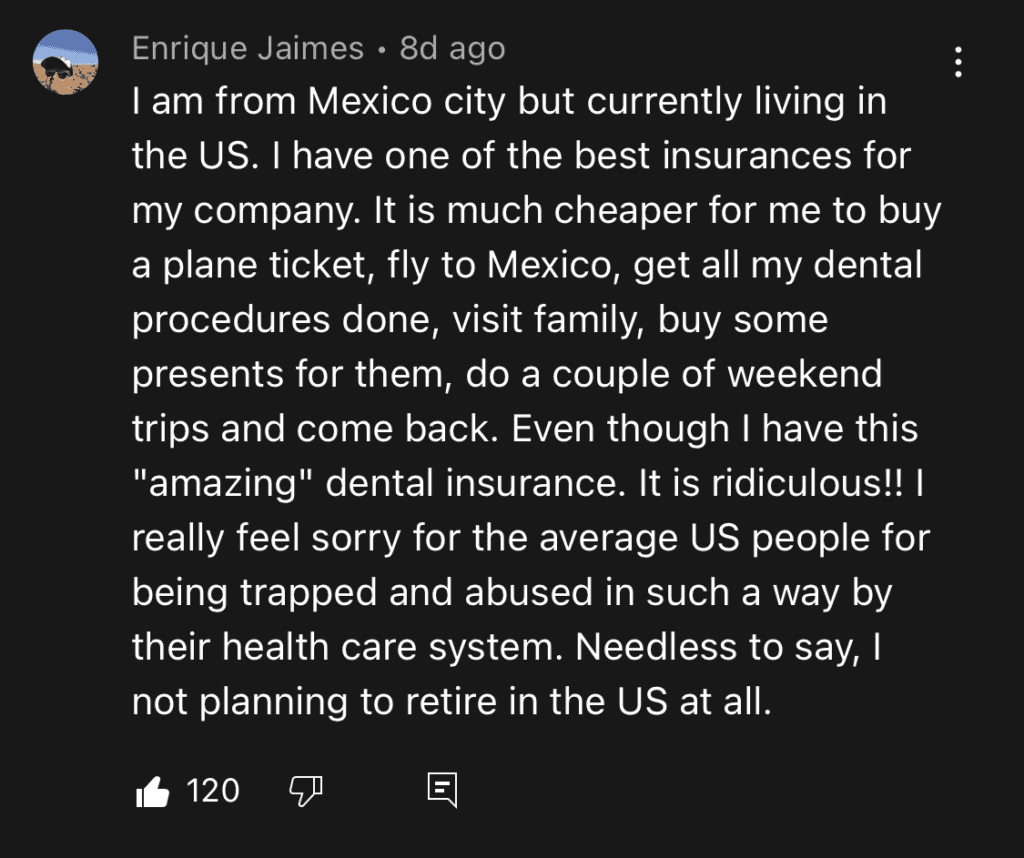
And you’ve probably heard about medical tourism in Mexico. It’s one of the most popular destinations for foreigners because you can receive amazing low-cost treatments and make a nice vacation out of it while you’re at it. And your total cost will still be lower than the same treatment north of the border.
But just how inexpensive is medical care really?
What Does Medical Care in Mexico Cost?
This is where most people’s eyes widen.. especially if you’re coming from the United States. Without insurance, you can expect something like:
A general doctor visit: anywhere from $50 to $400 pesos- or about $3-25 USD
A specialist consultation: around $800–$1,000 pesos- or about $43-$55 USD
Comprehensive lab panels: often under $1,000 pesos or about $55 USD
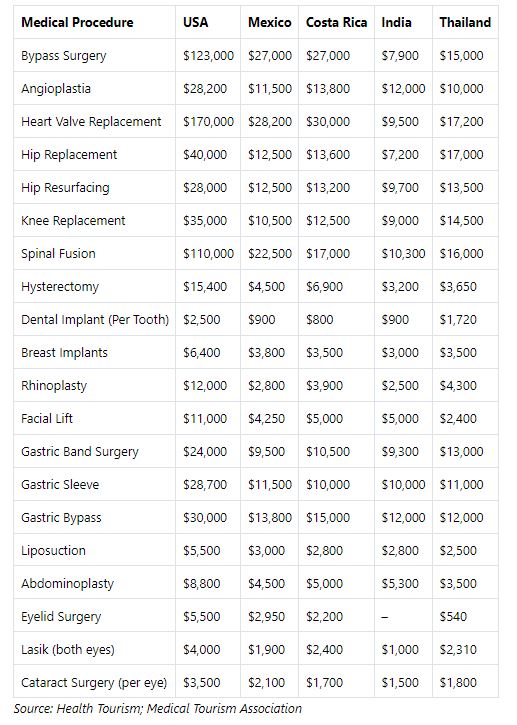
Even surgeries can be dramatically less than U.S. pricing. A hip replacement that might cost $40,000 USD without insurance in the U.S. may cost closer to $12,000 USD in Mexico.
But let’s stay grounded here.
Routine care is affordable.
Minor procedures are manageable.
Major emergencies are not cheap.
An ICU stay in a private hospital can run into tens of thousands of dollars. Cancer treatments are still serious financial events without insurance. Even if treatments are more affordable in Mexico, that doesn’t mean they don’t cost thousands of dollars.
Also, deposits are usually required upfront. Hospitals may ask for proof of funds before admitting you for non-life-threatening procedures.
What I am trying to tell you here is that Mexico is affordable. It is not free.
And I’ve unfortunately seen expats who didn’t plan properly burn through their savings after a major health event and end up moving back north because they ran out of money. That’s not meant to scare you — it’s meant to prepare you.
Can You Just Pay Out of Pocket?
Many expats do exactly that.
For basic care, it works beautifully. Pharmacies with attached doctors (consultorios) can handle minor infections, blood pressure checks, or basic prescriptions quickly and inexpensively. Lab work is affordable and fast. Imaging is often scheduled the same-day.
But self-insuring requires discipline. You need an emergency fund. And you need to understand that private hospitals require deposits upfront. Sometimes 5,000 pesos, sometimes 100,000 pesos or more depending on the situation. (approx $300-5,500 USD deposit)
If you don’t have insurance and don’t have savings, that’s where people get into trouble.
Private Health Insurance in Mexico
Private health insurance in Mexico can be significantly cheaper than comparable U.S. policies, but pricing depends on age, deductible, pre-existing conditions, and which tier of hospitals you want access to.
For example, a 71-year-old with a higher deductible might pay around $4,000–$4,500 USD per year for Mexico-only coverage. That’s often far less than what they were paying in the U.S.
However, pre-existing conditions are typically excluded. Waiting periods apply. And policies vary widely in what they actually cover.
This is why working with a broker who represents multiple companies matters. Some major providers of private health insurance in Mexico include:
• GNP
• Allianz
• MetLife
• Bupa
Inside our Complete Mexico Relocation Guide, we include a directory of vetted insurance brokers that work with expats across Mexico who can provide multiple quotes and explain which hospitals are in network- instead of you trying to decode policy documents on your own.
One HUGE benefit of private hospitals in Mexico, is that operate the way many Americans and Canadians wish their hospitals did.
• You get clear pricing
• Fast access to specialists- without having to wait weeks or months
• Modern facilities- there are different tiers of hospitals in Mexico
• Doctors who actually spend time listening and talking with you
• Staff whose job is to help, not deny claims and roll their eyes at you
Most larger private hospitals even have international patient desks, often with English speaking staff. You can find them at some hospitals in like Mexico City, Guadalajara, San Luis Potosí, Merida, Querétaro, and Monterrey.
And if you plan to live in Mexico, you should know that WhatsApp is used widely by doctors in Mexico to communicate with patients.
IMSS: The Public Healthcare Option
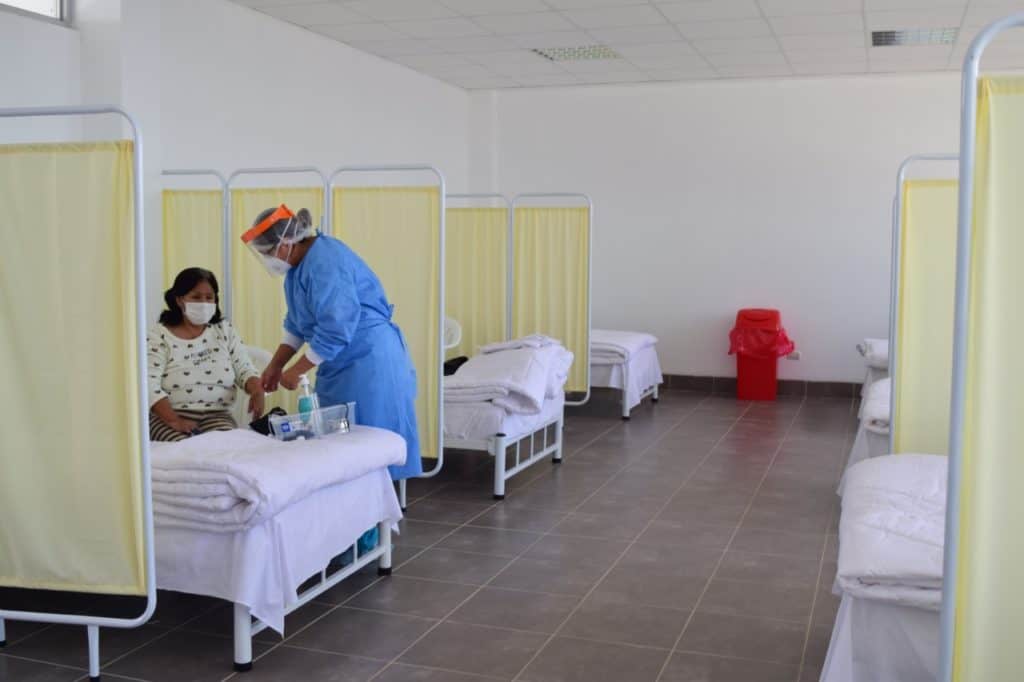
Many expats choose to enroll in the government-sponsored medical program known as IMSS or Instituto Medico del Seguro Social because the premiums are extremely affordable compared to private healthcare insurance.
IMSS is Mexico’s government-run healthcare program. It’s very affordable when compared to most other insurance policies. Often under $1,000 USD per year even in your 60s.
But affordability comes with trade-offs.
Wait times can be long. Facilities vary by region. You don’t choose your hospital. You are assigned one. English is rarely spoken. Shared rooms are common. Some medications may be temporarily unavailable.
There are also waiting periods for certain surgeries, and pre-existing conditions can complicate enrollment.
That said, IMSS can be an excellent backup system if you understand how it works.
We recommend specific medical concierge professionals inside our COMPLETE Mexico Relocation Guide who help clients enroll properly, navigate pre-existing condition disclosures, and actually use IMSS effectively.
Without guidance, IMSS can feel confusing. With guidance, it can be a valuable layer of protection.
Who Can Help You Get IMSS?
I have a directory of recommended professionals that help our clients sign up for IMSS. It includes walking you through how the system works, to ensure you can fully use IMSS, even if you have pre existing conditions. to get access to my directory of vetted contacts, you first have to purchase our COMPLETE Mexico Relocation Guide.
When you buy the guide, you get instant access to the step by step guide for moving to Mexico, and our directory of vetted contacts across Mexico. It also includes the most up to date information on the yearly cost of premiums to self enroll in IMSS.
Some Caveats About IMSS
And there are also some waiting periods to get full coverage. A waiting period means you cannot get covered for specific treatments until a period of time has passed.
Diseases with waiting periods
Six months:
Benign breast tumor.
Ten months:
Childbirth or Labor
One year:
Lithotripsy
Surgery for gynecological conditions, except for malignant neoplasms of the uterus, ovaries, and pelvic floor muscles.
Surgery for venous insufficiency and varicose veins.
Sinus and nose surgery.
Varicocele surgery.
Hemorrhoidectomy, rectal fistula surgery, and rectal prolapse.
Tonsillectomy and adenoidectomy.
Hernia surgery, except intervertebral disc herniation.
Hallux valgus surgery.
Strabismus surgery.
Two years:
Orthopedic surgery.
It is also worth noting that IMSS Hospitals vary in quality based on their location. Bigger cities will have multiple hospitals, whereas smaller communities will only have one. Another thing to note is that IMSS public hospitals may have:
- Long lines and wait times- you are waiting along with everyone else who doesn’t have private insurance.
- Availability of specialists during off-hours or holidays
- And in some cases, run-down facilities with outdated equipment
- You usually do not have a private room- 4 beds to a room is common.
- You must have someone with you 24/7
- No English-speaking staff in most cases
- Medications can sometimes be scarce
- Wait for days or weeks for more serious surgeries- which can be very uncomfortable.
Medical Doctor in Mexico Q&A
Here is a Q&A I did with a health insurance broker in Mexico to help clarify some of the most pressing questions about health insurance in Mexico and pre-existing conditions.
In case you missed it, the replay is available here.

In the video, our guest and our recommended expert explained why some pre-existing conditions are not covered by private healthcare insurance and what alternatives you have.
Medicare Advantage for U.S. Retirees
Added bonus: If you are from the U.S. and qualify for Medicare, you have access to several Medicare Advantage plans, which can provide emergency coverage for you in Mexico! Total game changer!
Now, it’s important to understand that traditional Medicare does not work in Mexico.
However, certain Medicare Advantage plans provide emergency coverage while you’re in Mexico. That can be a major safety net. We did a full breakdown explaining how this works here:
If you’re eligible, this is something you should research before relocating.
To learn more about using Medicare Advantage in Mexico for emergencies, please consider watching this Q&A I did with Jeff, a Medicare Advantage Expert we recommend working with.

What About Long-Term Care or Assisted Living?
This is something many people don’t consider until it’s too late. Mexico does have assisted living facilities and memory care options, but they are private pay and vary significantly by location.
This is kind of an up and coming business, because in Mexico we tend to take care of our elderly until they pass in our homes. But, that is changing with so many families having to work full time.
And certainly with the larger number of retirees moving to Mexico without immediate family, has made this industry grow a little bit each year.
If you want to know about Assisted Living Facilities in Mexico, go here
So With All This Info, What Should You Do?
That question depends on YOU!
Your current health, your financial situation, your lifestyle, and so on.
If you are a healthy individual under the age of 70, I’d recommend getting a quote from a reputable insurance broker that represents a variety of companies in Mexico. That way, you get a few quotes and can choose the best one based on your needs and budget.
I’d also recommend signing up for Medicare when you turn 65 if you are from the U.S. and adding Medicare Advantage- This will cover you if you travel back to the U.S. and will also cover life-threatening emergencies in Mexico.

If you cannot afford private health insurance in Mexico and qualify for IMSS- I’d suggest applying for it. At the very least, you’ll have some coverage in Mexico.
And most importantly, I recommend saving. Each month, you should put aside some money to cover medical emergencies in Mexico. Many Mexican hospitals expect a deposit upfront if you do not have insurance. Sometimes it’s as low as $5000 pesos, but it can be 100,000 pesos or more (about $5,000 USD). (If you have insurance, most carriers will give you a list of in-network hospitals that don’t require a deposit)
I mention this because you might move to Mexico to enjoy your retirement and live off your savings. You might self-insure and not have health insurance. But when an expensive treatment is needed, and you need to pay upfront in cash, you could get wiped out of your savings fast.
And unfortunately, I have seen many people leave Mexico because they ran out of money from a medical emergency. Or start a GoFundMe to help cover costs.
The best thing to do is plan ahead. The last thing you want is to stress out about medical bills when you have a medical emergency.
Take The Next Step With Confidence
If healthcare is one of the biggest questions on your mind about moving to Mexico, you’re absolutely right to take it seriously. This isn’t something you want to figure out after an emergency happens.
Inside our Complete Mexico Relocation Guide, we go much deeper into how healthcare in Mexico actually works in real life — not just the theory. You’ll see the most up-to-date IMSS self-enrollment premiums by age, understand exactly how waiting periods apply, learn how pre-existing conditions are evaluated, and know what to expect with hospital deposits and private insurance deductibles before you ever need to use them.
You’ll also get access to our private directory of vetted contacts across Mexico, including trusted insurance brokers who represent multiple companies (so you can compare real quotes), medical concierge professionals who help schedule appointments and review hospital billing, and specialists who assist with IMSS enrollment and navigating the public system correctly.
In other words, instead of guessing, you’ll have a clear plan. And real people you can contact when it matters.
We’ve helped thousands of Americans and Canadians move to Mexico the right way!
With fewer surprises, fewer expensive mistakes, and a lot more peace of mind. If you’re serious about relocating and want to understand how healthcare fits into your long-term plan, the Complete Mexico Relocation Guide is your next smart step.