 Contact
  Account


Residency in Mexico is possible via many routes.
In this article, we will explore temporary and permanent residency options specifically available for spouses and partners, known as Residencia Por Vinculo Familiar, or residency for family unity. This path to Mexican residency, also referred to as the family unity visa, provides a pathway for families to obtain residency together.
If you intend to apply for the family unity visa, ensure your sponsor is a Mexican citizen or holds valid temporary or permanent residence.
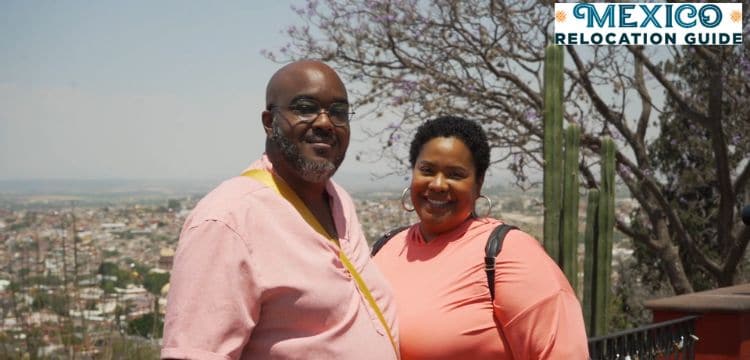
Jacqueline and Chris in San Miguel de Allende- Both customers of our Mexico Relocation Guide
This topic is especially important for those who have spouses that do not meet the financial solvency requirements at a local Mexican Consulate.
The good news is Mexico is VERY pro-family; so we’ll explain how couples and other family members of Mexican residents or nationals can petition each other without having to prove economic solvency. Residency through family unity can also eventually make you eligible to apply for Mexican citizenship.
Introduction to Residency
Residency in Mexico offers foreign nationals the opportunity to live, work, and build a life in the country, either temporarily or permanently. The process to obtain residency is designed to accommodate a variety of situations, but one of the most accessible routes is through family unity—when you have a close family relationship with a Mexican citizen or permanent resident.
There are two main types of resident cards available: the temporary resident card and the permanent resident card. A temporary resident card allows you to stay in Mexico for up to four years, providing flexibility for those who may not be ready to commit to permanent residency. After fulfilling the requirements and maintaining your temporary status for the minimum period, you can apply for permanent residency, which grants you the right to live and work in Mexico indefinitely. Permanent Residency through Family Unity allows foreigners with a Mexican spouse or child (including a son) born in Mexico to reside indefinitely in Mexico.
The key to qualifying for either a temporary or permanent resident card often lies in your family connections. If you are a family member—such as a spouse, child, son, or parent—of a Mexican national or permanent resident, you may be eligible to apply for permanent residency without needing to meet strict financial requirements. This pathway is especially valuable for those seeking to keep their family together in Mexico.
Whether you are seeking a temporary resident card or aiming for permanent residency, understanding the process and requirements is essential. Guides that walk you through moving to Mexico can help you prepare thoroughly so that, with the right documentation and a clear family relationship, you can obtain the resident card that best fits your needs and start your new chapter in Mexico.
Eligibility for Residency for Spouses and Partners
You can apply for this type of Mexican residency if you are an applicant who is a family member—such as a spouse, child, parent, or sibling—of a Mexican citizen or a current resident.
To begin the process, you may start at a Mexican Consulate or Embassy abroad or directly in Mexico. However, because many Mexican Consulates have recently made it harder and harder for families to apply together, we will focus this blog post on petitioning family members in Mexico, bypassing the process at a Mexican Consulate abroad.
To petition your family members from within Mexico, the foreign applicant must first enter Mexico as a tourist before initiating the process, unless they are completing residency through the Mexico residency canje process. You must then complete the process at a local immigration office (Instituto Nacional de Migración, or INM), which is the competent authority responsible for processing these applications.
Key Points:
- Who Can Apply: Spouses, children under 18 years of age, parents, siblings, and a foreign person with a family relationship to a Mexican citizen or resident.
- Where to Apply: Local INM offices throughout Mexico.
Applicants must be accompanied by the Mexican family member or the temporary or permanent resident family member when submitting the visa application at the consular office.
This type of residency provides an excellent opportunity for those wishing to join their family members who are already residents or nationals in Mexico. Whether your partner is a Mexican citizen or has already obtained residency status, you can legally join them and start your life in Mexico together. Common law partners and those in a common law union are also eligible, provided they can demonstrate their relationship with appropriate documentation.
The best part is that a spouse of a Mexican national or Resident DOES NOT need financial solvency to obtain their Mexican residency visa. As long as the process is done at an INM office in Mexico. (Mexican Consulates and Embassies have different procedures and requirements.)
Scheduling Your Appointment with INM

To apply for Mexican residency, the first step is to schedule an appointment at your local INM office. It is essential to have all the required documents ready to avoid delays in the process, as missing official documents can result in delays or rejection. Be sure to carry all necessary paperwork with you to your appointment, as incomplete documentation is a frequent challenge faced by applicants of the Family Unity Visa and can cause significant setbacks. The following documentation is typically required for the appointment. However, it is important for you to note that the process and requirements for a family unity Mexican Residency can vary between immigration offices across Mexico.
To help you understand what the local requirements are and what the local procedure is, we highly recommend hiring a reputable immigration facilitator in Mexico.
Scheduling an appointment early is crucial, as the availability of appointments may vary depending on the office’s location and whether they offer them online or in person. By preparing ahead of time, understanding current immigration fees in Mexico, and bringing proof of payment when required, you can ensure that your application process goes smoothly.
Role of the Mexican Consulate
The Mexican Consulate plays a pivotal role in the residency process for foreign nationals, especially for those starting their application from outside Mexico. As the official authority abroad, the Mexican Consulate is responsible for reviewing residency applications, verifying the authenticity of key documents like birth certificates and marriage certificates, and ensuring that all requirements are met before issuing a visa. The consular interview can be a significant hurdle if the applicant is unprepared or lacks necessary documentation.
For most applicants, the journey to residency begins at a Mexican Consulate abroad, where you submit your application for a temporary or permanent resident visa.
Understanding how to schedule Mexican consulate appointments is essential, since this process involves presenting a valid passport, proof of your family relationship with a Mexican citizen or permanent resident, and any other required documents. The consular section will carefully review your application, and if approved, will place a visa sticker in your passport.
Once you arrive in Mexico with your visa, the next step is to visit the National Migration Institute (INM), the government agency responsible for processing residency applications and issuing resident cards. It is important to note that final entry into Mexico is determined by immigration authorities at the port of entry, where they have the authority to review your documents and make the final decision on your admission.
At the INM office, you will exchange your visa for a temporary or permanent resident card, which serves as your official document to live and work in Mexico. The processing time for this step can vary, but it typically ranges from 2 to 10 working days.
A temporary resident card is usually valid for one year and can be renewed for up to four years. After maintaining temporary residency for the required period, you can apply for permanent residency, which allows you to remain in Mexico indefinitely. Throughout this process, the Mexican Consulate and the National Migration Institute work together to ensure that your application is handled efficiently and that you receive the appropriate resident card for your situation.
By understanding the role of the Mexican Consulate and the steps involved, you can better prepare for your residency journey and ensure a smooth transition to life in Mexico.
Documentation Requirements
The application process for a family unity visa involves submitting proof of relationship, identification documents, and undergoing a brief interview either at a Mexican consulate or at the INM offices in Mexico. To apply for Mexican residency for family unity, you must provide the following documents:
- Valid Passport: A valid passport is required for the Family Unity Visa application.
- Visa Application Form: A visa application form must be submitted as part of the application process.
- Passport-Size Photograph: One recent passport-size photograph is required for the application.
- Applicant’s Passport: Original and copy.
- Multiple Migratory Form (FMM): Downloaded and completed.
- Immigration Fee Payment: A credit or debit card to pay the required fee at the INM office.
- Printed Immigration Request Form: Complete it online and bring a signed copy of the INM Immigration Request Form. Applicants must sign the form.
- Birth Certificate: Original and copy are required for children or to prove family relationship. The birth certificate must be an official document issued by the competent authority in the home country. If the document is not a standard birth or marriage certificate, an equivalent figure recognized by Mexican authorities may be accepted.
- Foreign Documents Need to Be Translated: Documents issued outside of Mexico must be apostilled or legalized for the Family Unity Visa application. Foreign marriage or birth certificates (or equivalent figures) must also be translated into Spanish by an official “perito traductor” with a valid professional license.
- Identification of Spouse/Partner: The official ID of the Mexican family member or the resident’s current residency card and passport—both original and copies.
- Photographs: If photos are required, they must be recent, in color, and taken on a white background.
Having all the correct documents is vital for ensuring a successful application. Missing paperwork or incomplete forms can result in delays or even the rejection of your residency request. Once your paperwork is in order, you can focus on practical matters like finding the best rentals in Mexico so your housing is ready when your residency is approved.
Additional Documentation for Married and Unmarried Couples
- If Married Outside of Mexico: You will need an apostilled marriage certificate or an equivalent figure, such as a cohabitation certificate or other legal documentation issued by a competent authority. If the certificate is not in Spanish, it must be translated by a certified legal translator (perito traductor) in Mexico.
- If Married in Mexico: You’ll need to bring your Mexican marriage certificate and a copy.
- Unmarried Couples: If you are a common law partner in a common law union, you must provide an official apostilled document certifying the partnership in accordance with civil legislation. This may include a constancia de concubinato or other equivalent figure recognized by law, such as rental agreements, joint finances, or insurance policies. Recognition of common law unions is based on a legal act or federal act governing civil relationships in Mexico. This document should state that you and the Mexican citizen or resident have lived together continuously and permanently. If your partner or family member is a temporary resident student, you must also provide proof of ongoing studies and documentation verifying your relationship to support the application.
For unmarried couples, it’s important to note that Mexican authorities require proof that the partnership is real and stable. An apostilled document showing common law marriage or an equivalent figure helps certify the legitimacy of the relationship, which is crucial for securing residency.
Step-by-Step Process to Obtain Residency for Family Unity
Before starting, carefully review all details of the process to ensure you meet every requirement and avoid mistakes.
- Book an Appointment: Schedule an appointment at your local INM office in Mexico. Book in advance to secure a suitable date.
- Prepare and Submit Documentation: The application process involves submitting proof of relationship (such as marriage or birth certificates), identification documents (like passports), and undergoing an interview as part of the requirements.
- During Your Appointment: The applicant must provide all the required documents listed above. Be sure to arrive on time and bring the originals and copies of your paperwork. A valid travel document, such as a passport, is necessary for identification.
- Biometrics and Approval: If the applicant’s application is complete and approved, they will provide fingerprints, get their photo taken, and may even receive their residency card on the same day at that INM office.
The process can vary depending on the office and location. Some INM offices require online appointments, and some will only make appointments in person for the same day or a future date; some applicants may receive their residency card immediately, while others may need to wait a few weeks for processing. Following up with the INM office is essential if there are any delays.
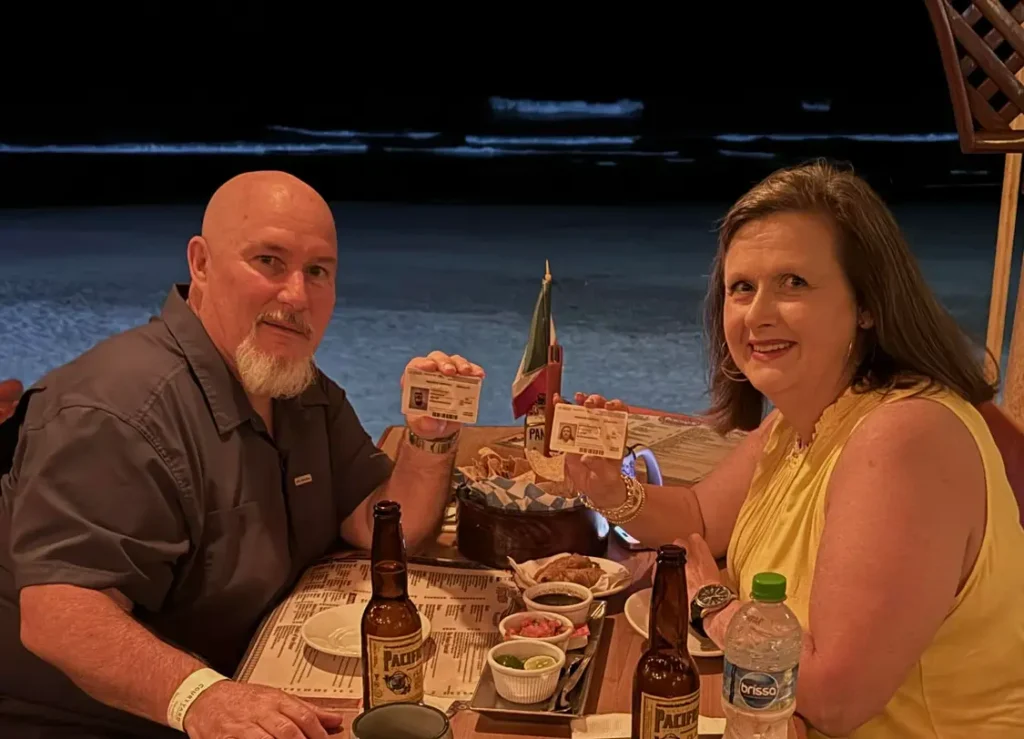
If you start the process at a Mexican Consulate abroad, applicants must apply for the Temporary Resident Card at Instituto Nacional de Migración (INM) within 30 days of arrival in Mexico. This is known as Canje.
So, you see the process varies depending if you are starting the process at a Mexican consulate or going directly through the INM offices in Mexico.
Temporary vs. Permanent Residency
Once your application for Mexican residency is approved, you will initially be granted temporary residence, typically through a temporary resident visa. This status is valid for two years. After two years of both marriage/partnership with a Mexican citizen or resident and maintaining temporary residence, you may apply for permanent residence, known as residente permanente. The National Institute of Migration (INM) oversees these applications and processes. Note that individuals with Mexican nationality may have different eligibility criteria for residency and visa processes.
Summary of the Residency Path:
- Temporary Residence (Residente Temporal): Granted for 2 years initially, usually starting with a temporary resident visa. Temporary Resident Visa holders can apply separately for a work permit in Mexico.
- Permanent Residence (Residente Permanente): Available after 2 years of marriage/partnership and temporary residence. You will not be required to prove economic solvency after fulfilling the temporary residence timeline. Holders of a Permanent Resident Visa can work and open a business in Mexico without additional permits.
Once you meet the requirements for permanent residence (residente permanente), you will have the same benefits as temporary residence but with the added bonus of not having to renew again.
Maintaining Temporary Residency and Upgrading to Permanent Residency
Maintaining your temporary residency in Mexico is essential if you want to continue living in the country and eventually upgrade to permanent residency. As a temporary resident, you must renew your temporary resident visa before it expires. In most cases, temporary residency can be renewed annually for up to four years. To renew, you’ll need to submit the required documents, including your valid passport, marriage certificate or proof of common law partnership, your child’s birth certificate (if applicable), and proof of income or financial support if requested by the immigration office.
It’s important to note that the renewal process must be started before your current temporary resident card expires. Missing the renewal window can result in fines or even the loss of your residency status, so be sure to keep track of your expiration date and schedule your appointment at the local immigration office (INM) in advance. Always bring originals and copies of all required documents to your appointment, and be prepared to pay the renewal fee.
After maintaining temporary residency for at least two years, many foreigners become eligible to apply for permanent residency. This is especially true if you are married to a Mexican citizen, have a Mexican spouse or common law partner, or are the foreign parent of a child with Mexican nationality. In these cases, you can request an upgrade to permanent residency after two years of holding a temporary resident visa.
To apply for permanent residency, you’ll need to gather and submit the required documents, which typically include your valid passport, birth certificate, marriage certificate or proof of common law partnership, and any supporting documents that demonstrate your relationship to a Mexican national or permanent resident. In some situations, you may also be asked to provide a letter stating your intent to reside in Mexico permanently. The process involves scheduling an appointment at your local INM office or, in some cases, at a Mexican consulate if you are applying from abroad. You’ll attend an interview, submit your paperwork, and pay the required fees.
Once your application is approved, you’ll be granted a permanent resident card, which allows you to live and work in Mexico without restrictions. As a permanent resident, you are required to notify Mexican authorities of any changes to your address or employment status. In most cases, after five years of permanent residency, you may be eligible to apply for Mexican nationality, opening the door to even more benefits, including the ability to obtain a Mexican passport.
At that stage, a broader guide to living in Mexico for expats can help you evaluate lifestyle choices, cities, and long‑term plans.
Because immigration rules and procedures can change, and requirements may vary by location, it’s always a good idea to consult with an immigration expert or facilitator. They can help you prepare the correct documents, avoid common mistakes, and ensure your application process goes smoothly. By following the official procedures and keeping your paperwork up to date, you can enjoy all the advantages of residency in Mexico, from family reunification to access to healthcare, education, and the vibrant life that Mexico has to offer.
Benefits of Mexican Residency for Spouses and Partners
Obtaining Mexican residency through family unity offers several benefits:
- Live Legally in Mexico: You can reside legally with your spouse or partner, avoiding any immigration issues.
- Work Opportunities: Temporary and permanent residency allows you to work in Mexico, contributing to your household and local community.
- Access to Services: With residency, you have access to public healthcare and other services available to Mexican residents. Access to certain services may require official documents, such as your resident card, and it’s wise to learn about healthcare in Mexico and key things to know before you need medical care.
- Path to Mexican Passport: Permanent residence can eventually make you eligible for a Mexican passport, which serves as proof of Mexican nationality and facilitates international travel.
Mexican residency not only provides legal benefits but also helps create a sense of belonging, allowing you to fully immerse yourself in Mexican culture and enjoy everything the country has to offer while understanding that Mexico is not a 3rd world country but a modern nation with strong infrastructure and vibrant communities.
What If You Need Help?
Navigating the residency process can be challenging, especially when you need to gather the right documents and ensure everything is in order. The interested party—the person seeking residency—can request assistance from facilitators, legal translators, or immigration experts to help with the process. Seeking professional advice can help address your concerns, avoid unnecessary expenses, and ultimately save you money during the Family Unity Visa application process.
We can provide you with vetted contacts, including trusted facilitators, legal translators, and immigration experts, to make your residency journey smooth and stress-free. It is advisable to consult with an immigration specialist to navigate the complexities of the Family Unity Visa application process, and to spend time in different neighborhoods so you understand local realities like noises you should know about before moving to Mexico.
Whether you’re unsure about the documentation requirements or need assistance booking appointments, our relocation guide and vetted contacts will help you every step of the way. If you need to obtain or replace a lost or missing document issued by authorities, such as a birth certificate or marriage certificate, additional steps may be required. We understand the complexities of obtaining Mexican residency, and our trusted contacts can save you time, stress, and potential setbacks.
Get the Complete Mexico Relocation Guide today, and make your transition to Mexico easier and save a ton of time on research. With our guide, you can confidently navigate the Mexican residency process and connect with experts who understand your needs.
Interested in a hands-on experience? Consider a Mexico Relocation Tour. But don’t just take it from us; check out our customer reviews here.