 Contact
  Account


Have you always dreamed of retiring near the ocean but can’t imagine paying what it costs to live near the beach in the United States or Canada?
Mexico can make that dream a lot more attainable.
But there is something important I want you to keep in mind before you start picturing yourself drinking your morning coffee from an oceanfront balcony.
Living at the beach in Mexico is very different from vacationing at the beach in Mexico.
When you’re on vacation, you probably aren’t thinking about where the nearest hospital is, how much electricity costs when you’re running the air conditioning in August, whether you need a car, how easy it is to find a long-term rental, or how long it takes to get to an international airport.
Those things become a lot more important once Mexico becomes your home.
That’s why there isn’t one single “best” beach town in Mexico for retirement.
You just need to figure out which lifestyle fits you.
Below are some of the best beach towns and coastal cities I think you should consider if you’re planning to retire in Mexico, along with realistic 2026 rental estimates.
Mexico Beach Towns at a Glance
| Beach Town | Approx. Monthly Rent (USD)* | Climate | Airport Access | Healthcare | Best For |
|---|---|---|---|---|---|
| Rosarito | $680–$1,410+ | Mild, dry | Tijuana / San Diego | Good; more options in Tijuana/San Diego | Staying close to the U.S. |
| Bucerías | $850–$1,980+ | Hot, humid | Puerto Vallarta | Good; major care in Puerto Vallarta | Smaller-town alternative to PV |
| Playa del Carmen | $565–$1,410+ | Hot, humid | Cancún | Very good | Walkability and Caribbean lifestyle |
| Puerto Morelos | $565–$1,410+ | Hot, humid | Cancún | Good; more options in Cancún/Playa | Quieter Riviera Maya living |
| Bacalar | $450–$850+ | Hot, humid | Chetumal | Limited; more options in Chetumal | Quiet lagoon living and nature |
| Puerto Vallarta | $850–$1,695+ | Hot, humid | In town | Excellent | Healthcare, amenities and expat community |
| Progreso | $450–$1,695+ | Very hot, humid | Mérida | Good locally; excellent in Mérida | Beach life with Mérida nearby |
| Ensenada | $510–$905+ | Mild, dry | Tijuana / San Diego | Good | Cooler weather and proximity to California |
| Mazatlán | $680–$1,245+ | Hot, humid | In town | Very good | Value and big-city amenities |
| Zihuatanejo / Ixtapa | $680–$1,410+ | Hot, tropical | In town | Moderate | Smaller Pacific Coast lifestyle |
| Huatulco | $565–$1,130+ | Hot, tropical | In town | Moderate | Nature, beaches and slower living |
| Puerto Escondido | $450–$1,300+ | Hot, tropical | In town | Limited to moderate | Beaches, food and casual lifestyle |
| La Paz | $680–$1,410+ | Hot, dry | In town | Very good | Sea of Cortez and outdoor lifestyle |
| San Carlos | $850–$1,695+ | Hot, dry | Hermosillo | Moderate | Boating, fishing and quiet living |
| Cabo San Lucas | $1,015–$1,980+ | Hot, dry | Los Cabos | Very good | Amenities, golf and active lifestyle |
| San José del Cabo | $1,015–$1,980+ | Hot, dry | Los Cabos | Very good | Quieter, upscale Los Cabos living |
A quick note about the rental prices: These are approximate long-term rental ranges, not Airbnb or vacation rental prices. Rentals can vary tremendously depending on the neighborhood, whether the property is furnished, how close you are to the beach, the time of year, and whether you’re renting something marketed primarily to foreigners. A luxury beachfront condo can easily cost two or three times more than a comfortable apartment a few neighborhoods inland.
Rosarito
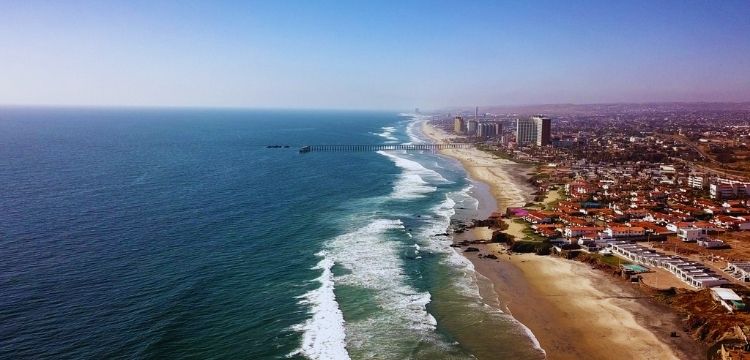
Rosarito- The Best of Mexico’s Pacific Coast
What if you could live near the ocean in Mexico while still being close enough to the United States to drive across the border?
That’s one of Rosarito’s biggest advantages.
Located just south of Tijuana in Baja California, Rosarito has attracted Americans and Canadians for decades. You get miles of coastline, restaurants, a sizable foreign community, and a much cooler climate than you’ll find in Mexico’s tropical beach destinations.
If you don’t tolerate heat and humidity well, that’s something worth paying attention to.
Rosarito has a Mediterranean-style climate, so you can actually need a jacket during parts of the year. Summers are generally much more comfortable than places like Puerto Vallarta, Playa del Carmen, or Huatulco.
And because you’re so close to the border, San Diego is accessible by car. That can be a huge advantage if you still have family, doctors, or other ties in Southern California.
Rosarito isn’t as inexpensive as it once was, especially in oceanfront developments marketed to Americans. In 2026, average apartment asking rents in Rosarito are around $18,000 MXN a month, although you’ll find less expensive rentals in local neighborhoods and much more expensive condos directly on the ocean. A realistic budget for a comfortable one- or two-bedroom long-term rental is approximately $12,000 to $25,000 MXN a month, depending heavily on location and amenities.
If you want a beachfront condo in one of the newer gated developments, plan on paying more.
Rosarito can be a particularly good option if staying close to the U.S. is one of your biggest priorities and you want coastal living without tropical heat.
We have vetted local professionals and local facilitators/ relocation tours in all of these beach towns. See what’s included in our COMPLETE Mexico Relocation Guide
Bucerías
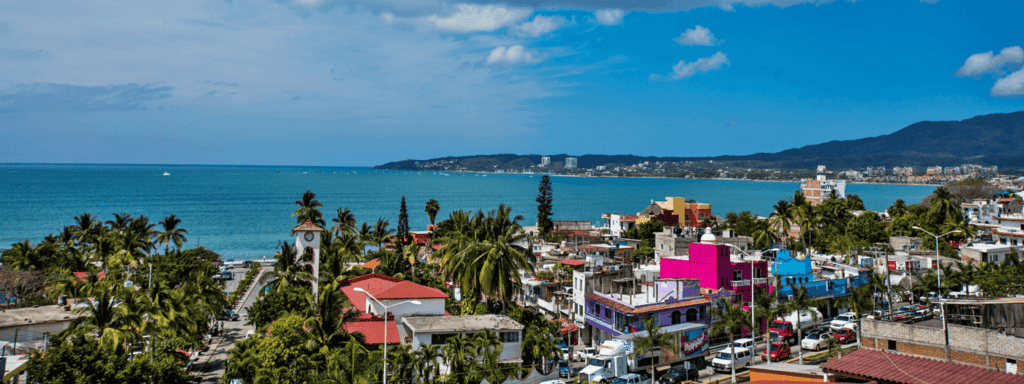
Bucerías is one of those places that gives you a smaller beach-town atmosphere without leaving you completely disconnected from the conveniences of a larger city.
Located in Nayarit along the Bay of Banderas, Bucerías is north of Puerto Vallarta and has a long beach, restaurants, cafes, galleries, markets, and a well-established foreign community.
Life generally feels slower here than it does in Puerto Vallarta.
But you’re still close enough to Puerto Vallarta that you can access its international airport, major hospitals, Costco, Home Depot, shopping centers, and other services when you need them.
That’s a pretty nice combination for retirement.
However, Bucerías has changed considerably over the years. Development throughout Riviera Nayarit has increased rapidly, and housing prices have gone up with it.
In 2026, the average asking rent for an apartment in central Bucerías is around $25,000 MXN a month. You can still find simpler long-term rentals farther from the beach for approximately $15,000 to $20,000 MXN, while newer furnished condos in the Golden Zone or close to the ocean commonly run $25,000 to $35,000 MXN or more.
So I wouldn’t necessarily describe Bucerías as a cheap beach town anymore.
What you’re paying for is the combination of a smaller community, proximity to the ocean, a sizable foreign population, and easy access to all the infrastructure around Puerto Vallarta.
If you like Puerto Vallarta but find it a little too busy, Bucerías is definitely worth visiting before you decide where to settle.
The 6 Beaches in Mexico We Recommend

Don’t choose a city just because it’s popular with other expats. Take our FREE City Matchmaker quiz and discover the 5 Mexican cities that best match what you are looking for. FIND MY CITY MATCHES →
Playa del Carmen
Playa del Carmen is one of the most international beach cities in Mexico.
Walk around town and you’ll hear English, Spanish, French, Italian, German, and plenty of other languages. You’ll meet retirees, families, digital nomads, snowbirds, and people who originally planned to stay for six months and somehow ended up staying for six years.
That’s part of Playa’s appeal.
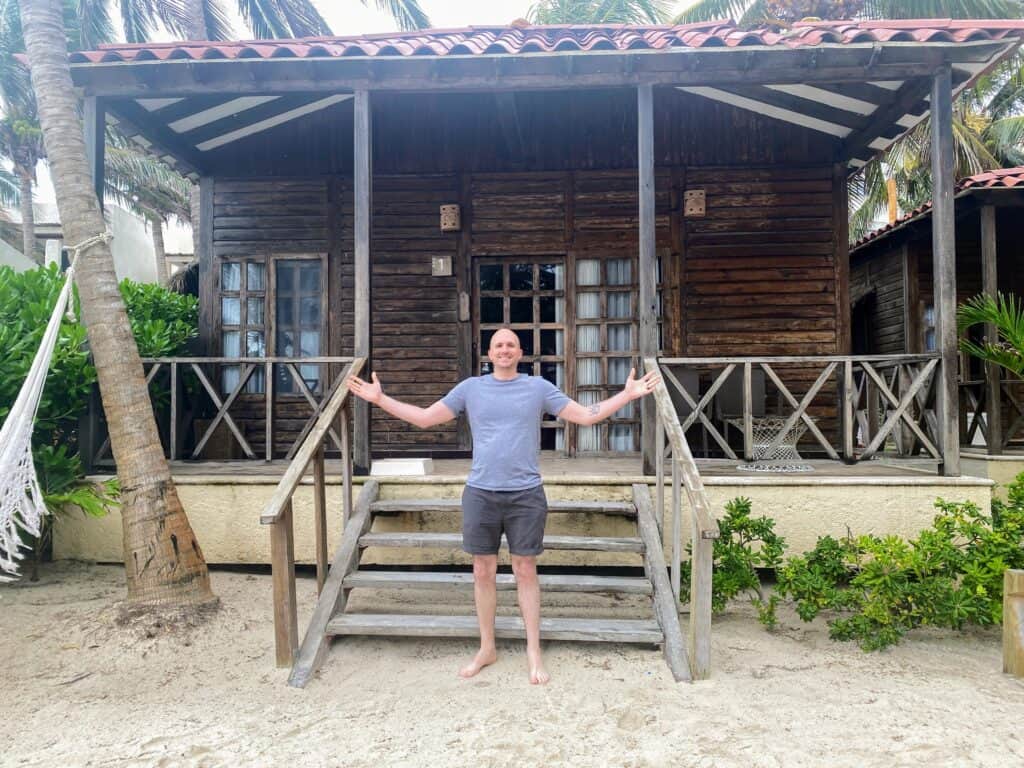
You also have that beautiful Caribbean water, white sand, warm weather year-round, restaurants, shopping centers, grocery stores, private hospitals, coworking spaces, and plenty to do.
And if you choose your neighborhood carefully, Playa del Carmen is one of the easier Mexican beach cities to live in without owning a car.
However, Playa has changed tremendously over the years. It is much more developed, busier, and more expensive than it used to be.
In September 2026, the average apartment asking rent across Playa del Carmen is about $16,700 MXN a month, but that number doesn’t tell the entire story.
You can still find one-bedroom apartments in more residential areas such as Ejidal for around $10,000 to $14,000 MXN a month. In Centro, Zazil-Ha, or Gonzalo Guerrero, a furnished one- or two-bedroom apartment is more likely to run approximately $17,000 to $25,000 MXN. In Playacar or a newer luxury development close to the beach, $25,000 to $50,000+ MXN a month is completely possible.
That’s a big difference from the $10,000-peso two-bedroom rentals people may remember from several years ago.
If you’re trying to save money, moving a little farther away from Fifth Avenue and the beach can make an enormous difference. You can see more of my advice about rentals in Mexico here.
You also need to think about things beyond rent. Playa is hot and humid, electricity can get expensive if you’re running your air conditioning all day, and sargassum can affect the beaches during certain parts of the year.
But if you want a walkable beach lifestyle, a large international community, lots of restaurants and activities, and relatively easy access to Cancún International Airport, Playa del Carmen is still one of the easiest places in Mexico for many foreigners to transition into.
And if you’re seriously considering this area, don’t just stay at a resort and assume you know what living here is like.
Our Private Relocation Tours in Playa del Carmen are designed to show you the things that actually matter when you’re considering a move: neighborhoods, housing, healthcare, shopping, transportation, and what normal everyday life looks like.
Puerto Morelos
Puerto Morelos wasn’t on my original list, but I think it deserves to be now.
If you like the Riviera Maya but Playa del Carmen feels too busy and Cancún feels too big, Puerto Morelos gives you an interesting middle ground.
It’s located between Cancún and Playa del Carmen, so you can get to the international airport fairly easily and you’re not terribly far from larger hospitals and shopping.
But Puerto Morelos itself still has more of a small-town feel.
One thing you need to understand when looking at rentals is that there are essentially two different Puerto Morelos rental markets: the beachside town and the residential communities on the inland side of the highway.
That makes a huge difference in price.
In 2026, you can find two-bedroom apartments in inland residential developments for approximately $10,000 to $15,000 MXN a month. On the beachside, furnished two-bedroom properties are more likely to run around $18,000 to $25,000 MXN, while newer or premium properties close to the ocean can climb to $40,000 MXN or more.
Puerto Morelos gives you many of the same weather considerations as Playa del Carmen: humidity, hurricane season, mosquitoes, and seasonal sargassum.
But if you want Caribbean living with a slower pace, I think it’s absolutely worth putting on your scouting list.
Bacalar
I’m keeping Bacalar on this list with one important clarification: Bacalar isn’t actually a beach town.
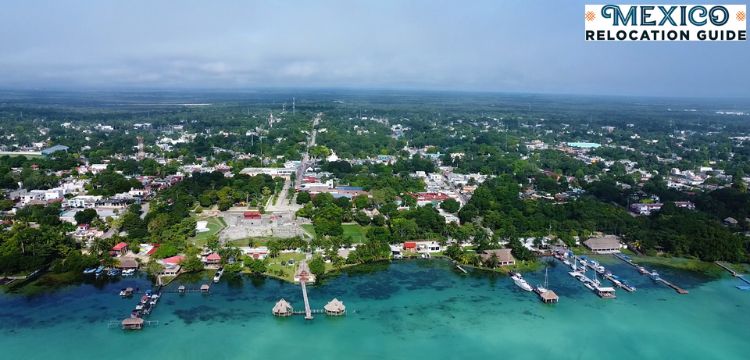
It’s on a freshwater lagoon.
But if what you’re really dreaming about is living near beautiful water rather than specifically living on the ocean, Bacalar deserves consideration.
The famous Lagoon of Seven Colors is spectacular, and Bacalar gives you a completely different lifestyle from Cancún or Playa del Carmen.
It’s smaller, quieter, and less developed. You won’t find the enormous selection of restaurants, hospitals, shopping centers, and entertainment you’ll find in the Riviera Maya’s larger cities.
Chetumal is the closest larger city, roughly 30 to 45 minutes away.
That means Bacalar works best for someone who genuinely wants small-town living.
Long-term rental inventory is also much smaller here, which makes averages difficult to rely on. In 2026, I’d realistically budget approximately $8,000 to $15,000 MXN a month for a basic one- or two-bedroom rental in town. Nicer furnished properties and anything close to or overlooking the lagoon can easily run $18,000 to $35,000 MXN or more.
Bacalar can be beautiful and peaceful, but don’t confuse peaceful with convenient.
If you’re someone who needs frequent specialist medical care, lots of shopping, nonstop entertainment, or easy international flights, another destination may make more sense.
Puerto Vallarta
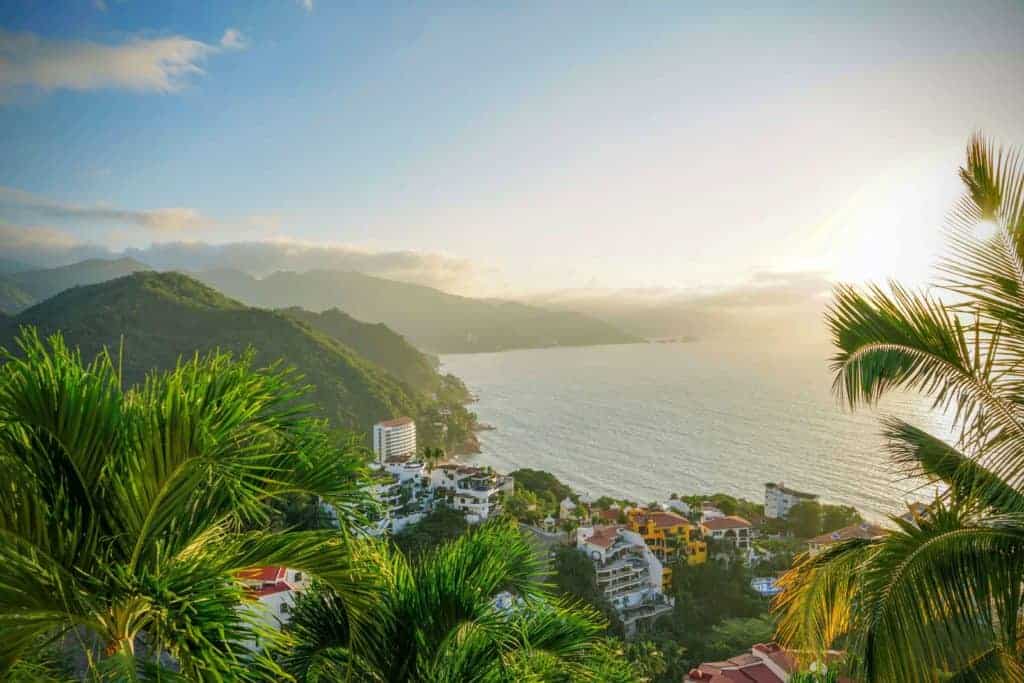
Puerto Vallarta continues to be one of the easiest beach cities in Mexico for foreigners to transition into.
Don’t choose a city just because it’s popular with other expats. Take our FREE City Matchmaker quiz and discover the 5 Mexican cities that best match what you are looking for. FIND MY CITY MATCHES →
It’s a real city with an international airport, modern private hospitals, specialists, supermarkets, Costco, Sam’s Club, shopping centers, restaurants, public transportation, and a very established foreign community.
But you still have the beach, the mountains, the Malecón, and beautiful neighborhoods overlooking the Bay of Banderas.
That’s a hard combination to beat.
Different neighborhoods also give you very different lifestyles.
Zona Romántica puts you in the middle of restaurants, nightlife, and a large foreign community. Versalles has become extremely popular for its food scene and central location. 5 de Diciembre gives you a more traditional neighborhood close to Centro, while Marina Vallarta offers newer condos and easy access to the airport.
Those neighborhoods also come with very different prices.
In 2026, apartment asking rents average around $14,700 MXN in 5 de Diciembre, $15,000 to $16,000 MXN in Las Glorias, and around $19,600 MXN in Versalles. Marina Vallarta averages considerably higher at roughly $34,000 MXN a month.
So for a comfortable long-term one- or two-bedroom rental, I would realistically budget somewhere around $15,000 to $30,000 MXN a month, knowing you can spend substantially more if you want a newer condo with an ocean view in one of the most popular areas.
Puerto Vallarta’s biggest downside for some retirees is the summer.
It gets hot and humid.
If you’ve only visited Vallarta between December and March, I strongly recommend coming back in the summer before deciding this is where you want to live.
But if healthcare, an international airport, restaurants, social activities, and a large foreign community are high on your list, Puerto Vallarta deserves serious consideration.
This is also one of the cities where a scouting trip can save you from making a very expensive mistake. A neighborhood you love for dinner may not be where you want to live every day. Our Mexico Relocation Tours can help you see the residential side of a city before you commit to moving there.
Progreso
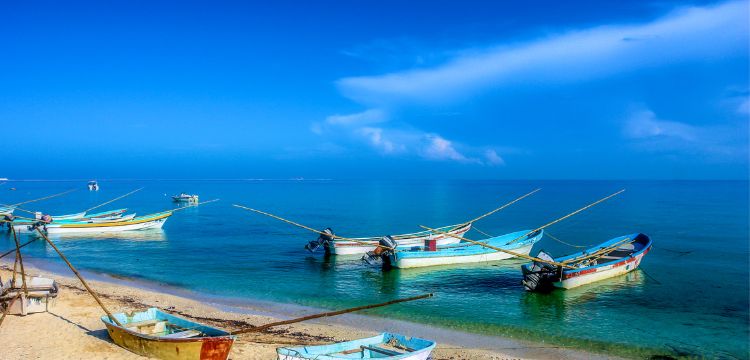
If you love Mérida but really want to live near the water, Progreso is worth considering.
Progreso sits on the Gulf of Mexico roughly 40 minutes north of Mérida and has a much slower pace than places like Puerto Vallarta or Playa del Carmen.
The beach here is different too. You’re not going to get the dramatic Pacific mountains or the bright turquoise Caribbean water you’ll see farther east.
What you do get is a relaxed Gulf Coast lifestyle, good seafood, a growing foreign community, and one very important advantage: Mérida is close by.
That gives you access to some excellent hospitals and specialists, major shopping, cultural activities, restaurants, and an international airport without requiring you to live in the middle of a large city.
Progreso has become more expensive as the Yucatán coast has grown in popularity. Current 2026 apartment asking rents average roughly $19,600 MXN a month, although there is an enormous range.
You may find simpler local apartments for $8,000 to $15,000 MXN, while a comfortable furnished two-bedroom closer to the water will often be around $18,000 to $30,000 MXN. Newer beachfront properties, particularly around Progreso, Chicxulub, and Yucalpetén, can cost much more.
One thing you absolutely need to experience before moving here is the summer.
Yucatán gets extremely hot and humid.
Don’t visit only in January and assume that’s what life will feel like year-round.
If you can handle the weather and like the idea of quiet coastal living with a major city nearby, Progreso can be a very appealing retirement option.
We have vetted local professionals and local facilitators/ relocation tours in all of these beach towns. See what’s included in our COMPLETE Mexico Relocation Guide
Ensenada
Ensenada gives you another option if you want to live near the ocean without dealing with Mexico’s tropical heat.
Located in Baja California, Ensenada is a working Mexican port city rather than simply a resort town.
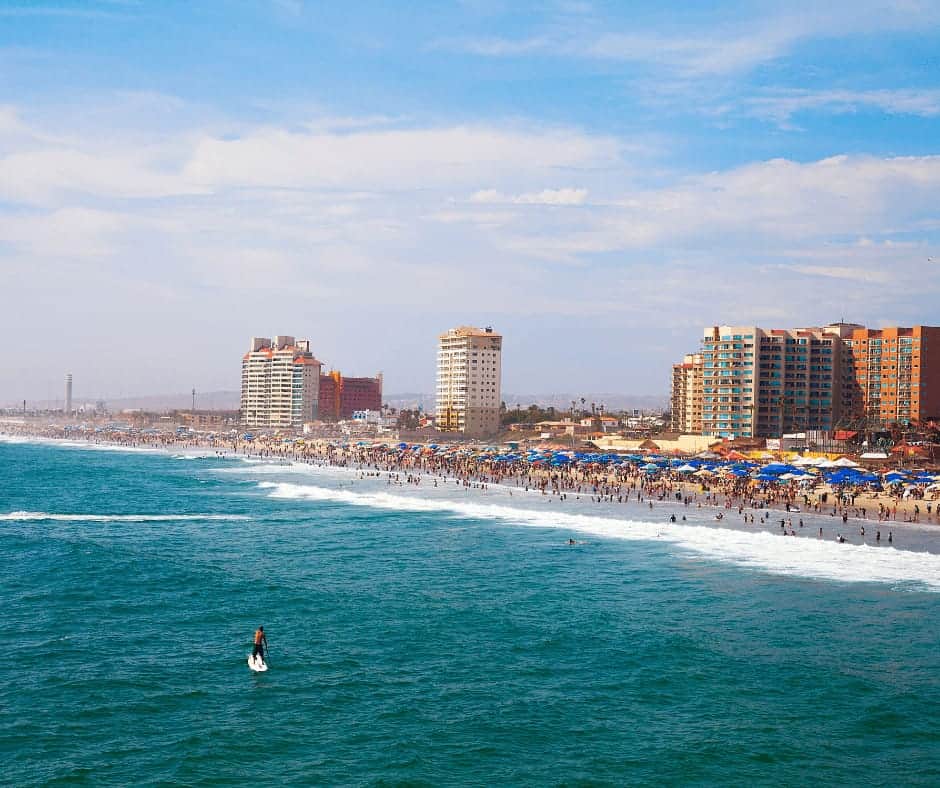
You’ll find hospitals, supermarkets, local markets, restaurants, shopping, established neighborhoods, and a large seafood and wine culture. You’re also close to Valle de Guadalupe, Mexico’s best-known wine region.
Like Rosarito, Ensenada has a drier Mediterranean-style climate. You’ll probably need a sweater during parts of the winter, and summers are much more comfortable than they are in southern Mexico.
You’re also close enough to the United States that driving back is realistic.
In 2026, local one- and two-bedroom apartments commonly fall around $9,000 to $16,000 MXN a month. Current listings include furnished one-bedrooms around $10,500 MXN and two-bedrooms around $10,000 to $16,000 MXN. Premium ocean-view properties and newer developments can be considerably more expensive, sometimes priced in U.S. dollars.
Ensenada wouldn’t necessarily be my first choice if your number-one priority is walking out your front door onto a tropical swimming beach.
I’d consider it if you want coastal living, cooler weather, good food, a real Mexican city, and proximity to California.
And if you’re still comparing coastal cities with highland destinations, check out my Ultimate Guide to the Best Places to Live in Mexico.
Mazatlán
Don’t choose a city just because it’s popular with other expats. Take our FREE City Matchmaker quiz and discover the 5 Mexican cities that best match what you are looking for. FIND MY CITY MATCHES →
Mazatlán gives you something that is becoming harder to find in some of Mexico’s most famous beach destinations: a real Mexican city that also happens to have miles of beach.
Known as the Pearl of the Pacific, Mazatlán has long attracted retirees and snowbirds from the United States and Canada.
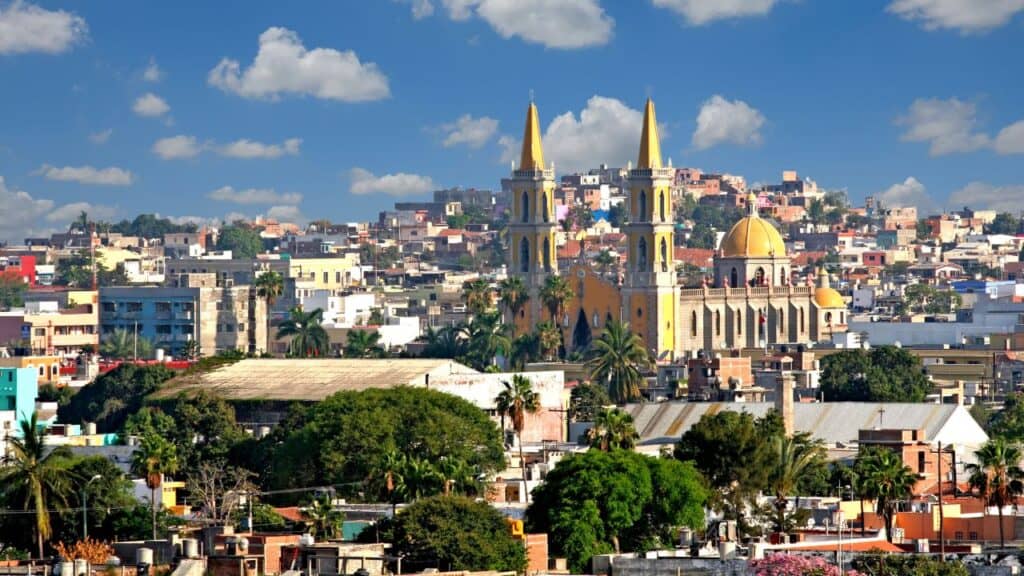
Centro Histórico gives you beautiful architecture, plazas, restaurants, and a more traditional Mexican atmosphere. Zona Dorada is more tourist-oriented and popular with foreigners, while Cerritos and Marina Mazatlán have newer condo developments.
Then you have the Malecón, which stretches for miles along the ocean and is a huge part of life here.
Mazatlán also remains relatively affordable compared with Puerto Vallarta and Los Cabos.
In September 2026, average apartment asking rents are approximately $12,700 MXN in Centro, $14,200 MXN in Las Gaviotas, $14,700 MXN in Zona Dorada, $15,700 MXN in Palos Prietos, and around $18,500 MXN in Cerritos Resort.
For most retirees looking for a comfortable furnished one- or two-bedroom apartment, I’d budget roughly $12,000 to $22,000 MXN a month. Newer oceanfront condos can obviously go much higher.
That’s still pretty good value for a large coastal city.
You’ll also find plenty of conveniences from back home, including Walmart, Sam’s Club, Home Depot, modern medical facilities, and an international airport.
The major tradeoff is summer weather. Mazatlán gets very hot and humid, and electricity can become one of your larger monthly expenses if you use air conditioning constantly.
But if you’re looking for a beach city where you can still experience everyday Mexican life and you don’t want Puerto Vallarta or Cabo prices, Mazatlán should be on your list.
Zihuatanejo and Ixtapa
Zihuatanejo and Ixtapa weren’t included in my original list, but I think they deserve to be.

They’re right next to each other, but they give you two very different lifestyles.
Ixtapa was developed as a resort destination, so you’ll find wide boulevards, hotels, high-rise condos, golf courses, and more planned development.
Zihuatanejo is an older fishing town built around a beautiful bay. It has local markets, neighborhood restaurants, smaller streets, and much more of the traditional coastal-Mexico feeling.
Some retirees actually like having access to both.
Don’t choose a city just because it’s popular with other expats. Take our FREE City Matchmaker quiz and discover the 5 Mexican cities that best match what you are looking for. FIND MY CITY MATCHES →
You could live in a quieter condo development in Ixtapa and head into Zihuatanejo when you want markets, restaurants, and a more traditional atmosphere.
The rental market varies dramatically because resort and vacation rentals can distort the numbers. In 2026, average apartment asking rents in Zihuatanejo are around $14,700 MXN a month, while Marina Ixtapa is closer to $15,000 MXN. For a comfortable long-term rental, I’d budget approximately $12,000 to $25,000 MXN a month, with premium condos and properties around La Ropa or the marina costing considerably more.
One thing I’d look at carefully before retiring here is healthcare.
You’ll find doctors and medical services locally, but if you have complicated medical needs and want a large selection of specialists, Puerto Vallarta or another larger city may suit you better.
For someone who wants a smaller Pacific Coast lifestyle without the size and development of Puerto Vallarta, though, Zihuatanejo and Ixtapa are definitely worth exploring.
Huatulco
Huatulco continues to be one of the beach destinations I think more retirees should know about.
Instead of one enormous stretch of heavily developed coastline, Huatulco is spread around several beautiful bays on Oaxaca’s Pacific Coast.
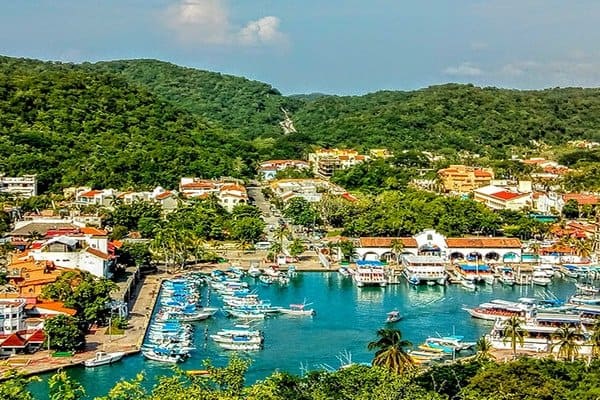
Life is slower here. There’s a lot of nature, development tends to be lower-rise, and you don’t have the giant commercial feel you’ll find in some of Mexico’s better-known resort destinations.
At the same time, Huatulco has an international airport, restaurants, supermarkets, medical services, and a growing foreign community.
One thing I particularly like about Huatulco is that it still feels Mexican.
You aren’t surrounded by giant American chain stores and franchises everywhere you look.
But Huatulco’s rental market is a perfect example of why you shouldn’t trust one average number.
In 2026, average apartment rents vary from approximately $6,000 to $9,000 MXN in some residential sectors, around $15,000 MXN in Sector F, and over $25,000 MXN in Sector L.
For a comfortable long-term one- or two-bedroom rental, a realistic budget is approximately $10,000 to $20,000 MXN a month. If you want a newer condo with an ocean view, pool, gym, and other resort-style amenities, expect $25,000 MXN and up.
That replaces some of the very low $300-$500 USD rental examples that were possible years ago but aren’t a good representation of what most newcomers will find today.
Huatulco is hot and tropical, so once again, visit outside of winter before deciding.
If you’re looking for beautiful beaches, nature, a slower lifestyle, and you don’t need a Costco five minutes away, Huatulco can be a great option.
Puerto Escondido, Oaxaca
Puerto Escondido is another destination I would add to this list in 2026.
It has exploded in popularity over the last several years, and it’s easy to understand why.
You have beautiful Pacific beaches, some of the best surfing in Mexico, an excellent food scene, and a very casual lifestyle.
But Puerto Escondido isn’t one single neighborhood.
Centro gives you a more local atmosphere and generally lower rents. Zicatela is busier and attracts surfers and visitors. La Punta has become extremely popular with foreigners and digital nomads, while Bacocho and Carrizalillo tend to have newer and more upscale properties.
That makes rental prices vary substantially.
Current mid-2026 long-term rental data puts studios around $5,000 to $9,000 MXN, one-bedrooms roughly $8,000 to $15,000 MXN, and two-bedrooms approximately $12,000 to $23,000 MXN. Bacocho, Carrizalillo, ocean-view properties, and larger furnished homes can easily cost more.
One caution I would give retirees is infrastructure.
Puerto Escondido has grown extremely quickly, and infrastructure hasn’t always grown at the same pace.
If you have serious ongoing medical needs or having a large selection of specialists nearby is a major priority, I would compare Puerto Escondido carefully with larger cities.
But if beaches, outdoor activities, food, and a more relaxed lifestyle rank higher on your list, Puerto Escondido could be a great fit.
La Paz
Many people immediately think of Los Cabos when they hear Baja California Sur, but don’t overlook La Paz.
La Paz and Cabo feel very different.
Don’t choose a city just because it’s popular with other expats. Take our FREE City Matchmaker quiz and discover the 5 Mexican cities that best match what you are looking for. FIND MY CITY MATCHES →
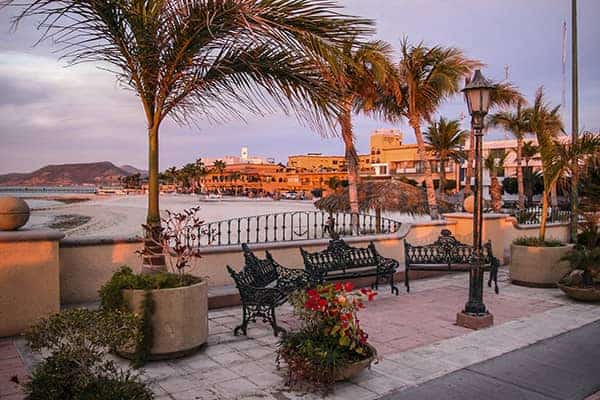
La Paz is the state capital and has much more of an everyday Mexican-city atmosphere. You have supermarkets, hospitals, restaurants, government services, neighborhoods where local families live, and a beautiful Malecón along the Sea of Cortez.
The food scene is excellent, especially if you love seafood.
And some of the most beautiful beaches in Mexico are nearby, including Balandra and Tecolote.
One thing to understand is that La Paz itself isn’t lined with huge swimmable beaches the way Playa del Carmen is. You’ll probably drive to some of the area’s best beaches.
Rent has also increased significantly since the days when you could easily find $600 beachfront apartments.
In 2026, a one-bedroom apartment in neighborhoods close to Centro or El Esterito can run approximately $12,000 to $18,000 MXN a month. Comfortable furnished one- and two-bedroom rentals are commonly around $15,000 to $25,000 MXN, and newer properties near the Malecón or with ocean views can go considerably higher.
The climate is one of La Paz’s biggest advantages.
It gets extremely hot during summer, but the climate is much drier than Puerto Vallarta, Huatulco, or the Riviera Maya.
If you like Baja, boating, fishing, kayaking, snorkeling, and being outdoors but don’t necessarily want the resort atmosphere or prices of Cabo, La Paz deserves a serious look.
San Carlos, Sonora
San Carlos is another destination I’d add for 2026, especially if you love boating, fishing, kayaking, diving, hiking, or simply being outdoors.
The landscape is completely different from the tropical beach destinations farther south.

Here, mountains and the Sonoran Desert meet the Sea of Cortez.
San Carlos also has a long-established community of Americans and Canadians, particularly seasonal residents, and it’s possible to drive here from the United States.
This is a much quieter destination than Puerto Vallarta, Mazatlán, or Playa del Carmen.
That can be wonderful if that’s what you’re looking for.
But if you want hundreds of restaurants, major shopping centers, and constant entertainment, San Carlos may feel too quiet.
Rental inventory is smaller here and can be seasonal. Current September 2026 data puts the average asking rent for houses in San Carlos at around $25,500 MXN a month, with examples ranging from approximately $13,000 to $28,000 MXN depending on size and location.
For a comfortable furnished property, I would plan on roughly $15,000 to $30,000 MXN a month. Marina, ocean-view, and premium properties can cost substantially more.
If you’re someone who dreams about spending retirement on the water rather than at a shopping mall, San Carlos deserves a look.
Cabo San Lucas
At the southern tip of Baja California Sur, Los Cabos gives you a completely different version of beach living in Mexico.
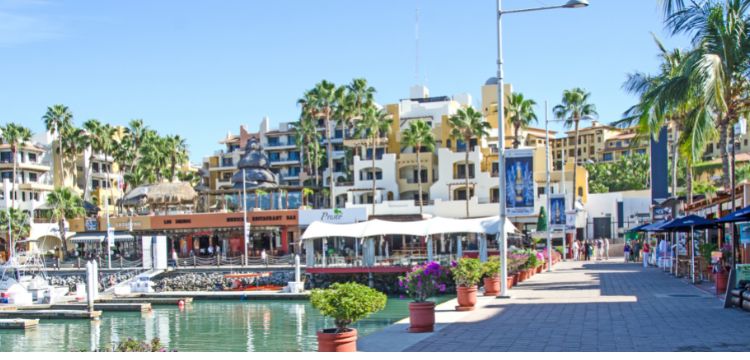
Cabo San Lucas is the more energetic side of the area. You have boating, restaurants, nightlife, golf, luxury developments, resorts, and a huge tourism industry.
Don’t choose a city just because it’s popular with other expats. Take our FREE City Matchmaker quiz and discover the 5 Mexican cities that best match what you are looking for. FIND MY CITY MATCHES →
You also have modern hospitals, supermarkets, shopping centers, and an international airport nearby with excellent connections to the United States and Canada.
So if you want modern infrastructure and don’t mind living somewhere heavily influenced by tourism, Cabo can make the transition to Mexico relatively easy.
But let’s talk about cost.
Cabo is not where you move because you’re looking for the cheapest beach retirement in Mexico.
In September 2026, the average apartment asking rent in Cabo San Lucas Centro is around $15,700 MXN, but more desirable residential areas are considerably higher. El Tezal averages around $30,000 MXN, and newer condos, gated communities, and ocean-view properties can easily exceed that.
For a comfortable one- or two-bedroom long-term rental, I’d budget approximately $18,000 to $35,000 MXN a month, knowing that luxury properties can go far beyond that.
Cabo can still cost less than comparable resort communities in California, but by Mexican standards, it’s expensive.
If your retirement budget allows for it and you want an active lifestyle, modern conveniences, excellent flight connections, golf, boating, and plenty of restaurants, Cabo San Lucas can work very well.
San José del Cabo
Before you decide Cabo isn’t for you, I would also spend some time in San José del Cabo.
Cabo San Lucas and San José del Cabo are part of the same municipality, but they don’t feel the same.
San José generally has a quieter and more residential atmosphere. Its historic center has galleries, restaurants, and a traditional main plaza, while the surrounding area gives you plenty of modern condos and residential developments.
It’s still expensive, but some retirees prefer the pace here to Cabo San Lucas.
In September 2026, average apartment asking rents across San José del Cabo are around $17,800 MXN a month, while the Hotel Zone averages approximately $35,000 MXN. Current two-bedroom listings around town can be around $30,000 MXN or more.
For a comfortable long-term rental, I’d budget approximately $18,000 to $35,000 MXN, and considerably more if you want something in a premium development.
If you like what Los Cabos offers but don’t necessarily want to be in the middle of Cabo San Lucas nightlife, San José del Cabo may be the better fit.
So Which Beach Town in Mexico Is Best for You?
After reading through all of these places, you may have narrowed your list down.
Or I may have just made your list longer.
That’s okay.
Because choosing where you’re going to live in Mexico shouldn’t be a decision you make in an afternoon.
Puerto Vallarta may be better for you if having excellent healthcare, an international airport, and a large foreign community are priorities.
Mazatlán may make more sense if you want a larger Mexican city and good value near the ocean.
La Paz or San Carlos may appeal to you if you prefer the dry climate and outdoor lifestyle of the Sea of Cortez.
Rosarito or Ensenada may make sense if staying close to the United States is important.
Playa del Carmen or Puerto Morelos might be your choice if you’ve always dreamed about Caribbean water and want a large international community nearby.
Huatulco, Puerto Escondido, or Zihuatanejo may appeal to you if you’re looking for a slower Pacific Coast lifestyle.
And Progreso could be a great compromise if you want to live near the water while still having Mérida’s healthcare and infrastructure within driving distance.
There isn’t one right answer.
And that’s actually one of the things I love about Mexico.
You have choices.
Don’t Move Somewhere Because You Loved It on Vacation
This may be the most important advice I give you in this entire article.
Go visit before you move.
Better yet, rent for a while before you buy anything.
Mexico can be an incredible place to live, but Mexico isn’t for everyone. And even if you know Mexico is right for you, the first city you fall in love with may not be the city that’s right for your everyday life.
Spend a normal Tuesday there.
Go grocery shopping.
Look at long-term rentals.
Drive around during rush hour.
Visit a hospital.
See how far you’d have to travel to get to the airport.
Walk around the neighborhood you’re considering during the daytime and at night.
And if you’re thinking about a tropical beach destination, please don’t only visit in January.
Go when it’s hot.
Find out how you feel about the humidity before you’ve signed a one-year lease or bought a condo.
That’s the kind of research that can save you from a very expensive mistake.
Learn to Live Like a Local Before You Move
You may already have a shortlist of places you’re considering. And if you’re ready to start scouting them, nothing beats having boots on the ground.
Our Mexico Relocation Tours are specifically designed for people who are considering moving to Mexico.
These aren’t typical sightseeing tours.
A relocation tour is usually a one- or two-day private tour of a specific city with a local guide, and it’s customized around the things you need to understand before deciding whether that city could be home.
Depending on the city and what matters most to you, you may explore neighborhoods, typical housing options, supermarkets, hospitals, transportation, local markets, and other parts of everyday life.
Instead of spending your scouting trip trying to figure everything out yourself, you have someone local showing you what living there actually looks like.
Visit our Mexico Relocation Tours page to see where tours are currently available.
Once You Find Your City, We’ll Help You Figure Out the Rest
Finding the right beach town is only one part of moving to Mexico.
Then come all the other questions.
How do you get legal residency? How do you find a trustworthy long-term rental? What kind of health insurance should you have? Should you bring your car? How do you move your belongings? How do you open a Mexican bank account? What happens with taxes? How do you get a driver’s license? And who do you call when you need a trustworthy immigration facilitator, realtor, mover, attorney, healthcare professional, or other local expert?
That’s exactly why I created the Complete Mexico Relocation Guide.
We’ve helped hundreds of thousands of people learn how to move to Mexico the right way, and the goal is simple: help you make the move with fewer headaches, fewer expensive mistakes, and fewer surprises.
The Complete Mexico Relocation Guide walks you through the relocation process step by step. You also get access to our directory of vetted contacts throughout Mexico, so when you need professional help, you aren’t starting from a random Google search or hoping that someone recommended in a Facebook group is legitimate.
Learn more about the Complete Mexico Relocation Guide– Take $50 Off with code wow10mrg at checkout for a limited time!
Mexico has some incredible places to retire near the water.
But don’t choose your new home based only on which place has the prettiest beach.
Choose the place where the weather, housing, healthcare, transportation, community, budget, and everyday lifestyle work for you.
That’s how you move to Mexico the right way.