Contact
 Account


What if you could live in a beautiful Mexican city with spring-like weather, excellent healthcare, modern shopping centers, and a lower cost of living than many cities in the United States or Canada?
And what if you could enjoy all of those big-city conveniences without living in Mexico City?
Welcome to Querétaro, Mexico!

Querétaro is one of my favorite cities in Mexico, and for good reason.
You get a beautiful colonial historic center, modern neighborhoods, excellent restaurants, an international airport, and many of the conveniences you’re probably used to back home.
But unlike popular beach destinations such as Puerto Vallarta or Playa del Carmen, you don’t have to deal with tropical humidity or hurricane season.
Of course, Querétaro isn’t perfect. Traffic can be frustrating, water shortages are a concern during dry periods, and some neighborhoods are much more walkable than others.
So, is Querétaro the right place for you?
In our latest video, we explore what it’s really like to live in Querétaro, including rental prices, monthly living expenses, healthcare, transportation, neighborhoods, and the biggest pros and cons.
Watch Our New 2026 Video: Living in Querétaro, Mexico — Costs, Neighborhoods & Daily Life

Is Querétaro, Mexico, Right for You?
Querétaro offers an appealing combination of mild weather, modern conveniences, beautiful architecture, and different housing options.
If you want the benefits of a big Mexican city without living in Mexico City, it’s definitely worth exploring.
But it may not be your ideal destination if you’re looking for a small beach town, a large English-speaking retirement community, or a place where you can live almost anywhere without a car.
That’s why I always recommend visiting before committing to a long-term move.
Spend time in different neighborhoods. Explore local markets. Experience the traffic. And think about the lifestyle you actually want, not just the beautiful homes you see online.
You may discover that Querétaro is exactly what you’ve been looking for. In fact, in case you didn’t know Querétaro was declared a UNESCO World Heritage Site in 1996- so you can count on that it is beautiful!
And if you’re still comparing cities, take our Free Mexico City Matchmaker Quiz to discover five places in Mexico that may fit your lifestyle and preferences.
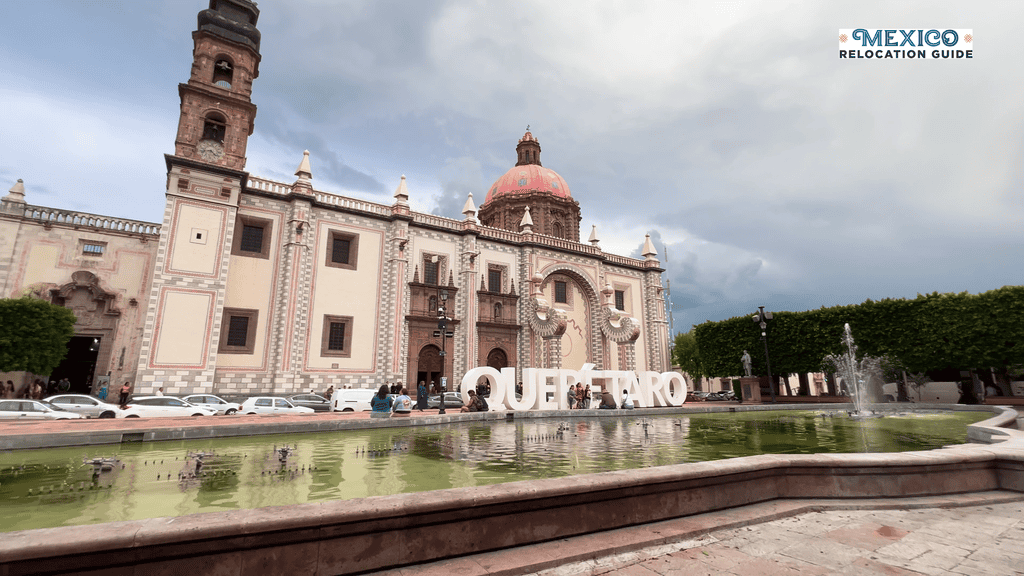
Where Is Santiago de Querétaro, Mexico?
Querétaro is located in Mexico’s Central Highlands, about three hours northwest of Mexico City by car or bus.
It’s also about an hour from San Miguel de Allende, one of Mexico’s most popular destinations for American and Canadian retirees.
But the two cities offer very different lifestyles.
San Miguel de Allende is known for its smaller-town atmosphere, art galleries, and large foreign community.
Querétaro, on the other hand, is a much larger working city.
It’s home to Mexican families, engineers, professionals, university students, and growing industries such as aerospace and manufacturing.
This means you get a more traditional Mexican lifestyle rather than living in a community built mainly around foreign retirees.
You’ll find modern shopping centers, private hospitals, universities, restaurants, and excellent highway connections.
And right in the middle of it all is Querétaro’s beautiful historic center, a UNESCO World Heritage Site.
What’s the Weather Like in Querétaro?
One of Querétaro’s biggest selling points is its weather.
Because the city sits around 6,000 feet above sea level, the climate is generally mild and dry throughout much of the year.
Daytime temperatures are often in the 70s Fahrenheit, although April and May can get into the low 90s.
The good news is that temperatures usually drop at night, so you may not need air conditioning as often as you would in Mexico’s beach cities.
Winters are generally sunny and pleasant during the day. However, December and January nights can get surprisingly cold, sometimes approaching freezing.
And here’s something many people don’t consider: Most Mexican homes don’t have central heating or the same insulation you’re used to in the United States or Canada.
So even if it’s 40°F outside, your home may feel much colder than you expect.
You’ll definitely want warm blankets and a jacket during the winter.
The rainy season typically runs from June through September. Rain often arrives in the afternoon or evening rather than lasting all day.
Querétaro is also far from Mexico’s coastal hurricane zones and experiences much less earthquake activity than some other parts of the country, although no location is completely free of natural risks.
My advice: If you’re looking for a city with mild weather and relatively low humidity, Querétaro deserves a spot on your shortlist.
Best Neighborhoods to Live in Querétaro
Querétaro is a large city, and choosing the right neighborhood can make a huge difference in your experience.
Some neighborhoods are perfect if you want to walk to restaurants and coffee shops.
Others are better if you prefer newer homes, gated communities, and more living space.
Here are some of the areas I recommend researching.
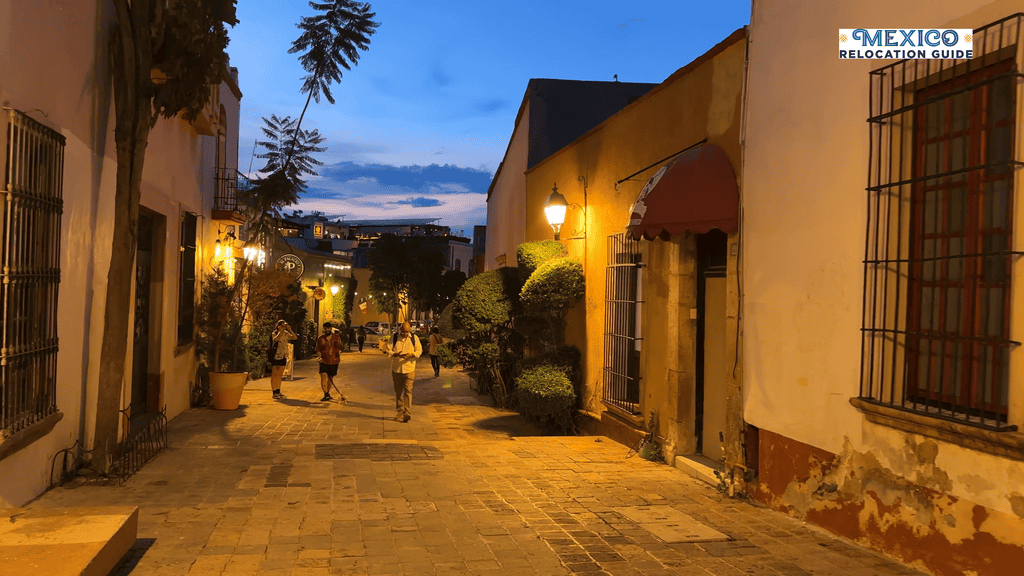
Centro Histórico (Historic Center): Best for Walkability and Culture
If you love beautiful architecture, sidewalk cafés, historic plazas, and being able to walk almost everywhere, Querétaro’s Centro Histórico may be perfect for you.
This is the postcard version of Querétaro.
You’ll find charming colonial buildings, vibrant cobblestone streets, pedestrian-only streets, markets, restaurants, live music, and Baroque architecture, plus the Querétaro Aqueduct, an 18th-century landmark with 74 arches that stretches 1,280 meters. Plaza de Armas and Jardín Zenea are central gathering spots in the historic center. Templo de Santa Rosa de Viterbo is a standout example of Mexican pink Baroque architecture.
One of the biggest benefits of living here is that you may not need a car.
You can walk to many of your daily necessities and use Uber or a taxi when you need to travel farther.
However, living in Centro also has some downsides.
Depending on your location, you may hear church bells, festivals, music, and street noise. Events such as Noche de Leyendas also bring interactive theater to the historic center.
Parking can also be difficult and expensive.
And because many buildings are older, you’ll want to pay close attention to plumbing, electrical systems, water pressure, and how comfortable the home feels during colder months.
Rental costs in Centro Histórico:
Furnished one- and two-bedroom apartments in or near Centro commonly range from approximately $11,000 to $16,000 MXN per month ($650–$950 USD) in the examples featured in our video.
We’ve also seen furnished lofts near Avenida Universidad advertised for around $11,000 MXN with electricity, water, and internet included.
These can be great options if you want to live in a walkable area without spending a fortune on housing.
Juriquilla and Zibatá: Best for Modern Homes and Gated Communities
If you prefer newer construction, larger homes, parks, and modern amenities, you’ll want to explore Juriquilla and Zibatá.
These areas are popular with Mexican professionals, families, and some foreigners, and Juriquilla is also known for leisure options with access to nearby hot springs—part of a region with around 600 hot springs popular for relaxation.
You’ll find gated communities with controlled entrances, green spaces, walking paths, playgrounds, and sometimes amenities such as swimming pools, gyms, tennis courts, or golf courses.
Many homes have newer kitchens, modern bathrooms, and more living space than you might find in Centro.
Zibatá is technically in the neighboring municipality of El Marqués, but it’s part of the greater Querétaro metropolitan area.
The biggest downside to both areas is their location.
Although you’ll have shopping centers and other services nearby, these neighborhoods are more car-dependent than Centro.
Juriquilla also has one of the city’s two bullrings; its smaller but beautiful bullring is widely regarded as the most beautiful bullring in the country, even compared with Santa María.
Depending on traffic, driving into the historic center can take 25–40 minutes or longer.
And traffic in Querétaro has increased significantly as the city continues to grow.
Rental costs in Juriquilla and Zibatá:
In our newer video, we found examples of three-bedroom homes in Zibatá renting for approximately $15,000–$23,500 MXN per month ($875–$1,400 USD).
Furnished homes can cost more, sometimes reaching $25,000–$30,000 MXN monthly.
We’ve also seen furnished apartments in Juriquilla with utilities included for approximately $29,000 MXN ($1,700 USD).
Some rentals include community maintenance fees, while others charge them separately.
Other Querétaro Neighborhoods Worth Exploring, Including Plaza de Armas
Centro, Juriquilla, and Zibatá aren’t your only choices.
Depending on your budget and lifestyle, you may also want to research Milenio III, El Refugio, El Campanario, Álamos, Carretas, and Zakia.
Each offers a different mix of housing prices, convenience, walkability, and amenities.
Don’t choose your neighborhood based only on online photos or YouTube videos.
Visit in person, walk around, check traffic during different times of the day, and see how close you are to grocery stores, hospitals, and the places you’ll visit regularly.
A beautiful home won’t feel like such a bargain if you spend two hours in traffic every day.

How Much Does It Cost to Live in Querétaro, Mexico?
Now let’s talk about one of the biggest questions people have before moving to Mexico.
How much money do you actually need?
The answer depends on your lifestyle. As a rough baseline, housing averages about $500 per month, groceries for one person around $200 monthly, and a mid-range restaurant meal about $10, with hotels adding another variable for shorter stays.
Some people want a simple apartment, local Mexican food, and a walkable neighborhood.
Others prefer a spacious home in a gated community, a car, imported groceries, and frequent restaurant meals.
Both lifestyles are possible in Querétaro, but they come with very different costs.
Here are two examples from our latest video.
Budget 1: Comfortable Local Lifestyle — $1,500–$1,800 USD per Month
Let’s say you’re a couple renting a furnished apartment near Centro for around $12,000 MXN per month.
You shop at local markets, cook many of your meals at home, and enjoy affordable neighborhood restaurants.
You don’t own a car because you can walk to many places and use Uber or public transportation when needed.
With this lifestyle, a couple could budget around $1,500–$1,800 USD per month for regular living expenses.
Budget 2: More Upscale Lifestyle — $3,500–$4,000 USD per Month
Now imagine you prefer a larger, three-bedroom home in a gated community such as Zibatá or Juriquilla.
You pay around $22,000 MXN per month in rent.
You own a car, shop regularly at Costco and H-E-B, buy imported foods, eat out several times a week, and perhaps hire someone to help clean your home.
You also enjoy weekend trips to San Miguel de Allende or Querétaro’s wine country.
For this lifestyle, a couple might budget around $3,500–$4,000 USD per month.
These are planning examples, not guaranteed monthly costs. Your spending will depend on your rental, healthcare needs, transportation, and personal choices. Major medical expenses and other one-time costs may need separate budgeting.
If you’d like to see more real examples of what people spend throughout Mexico, check out our Real Cost of Living in Mexico page.
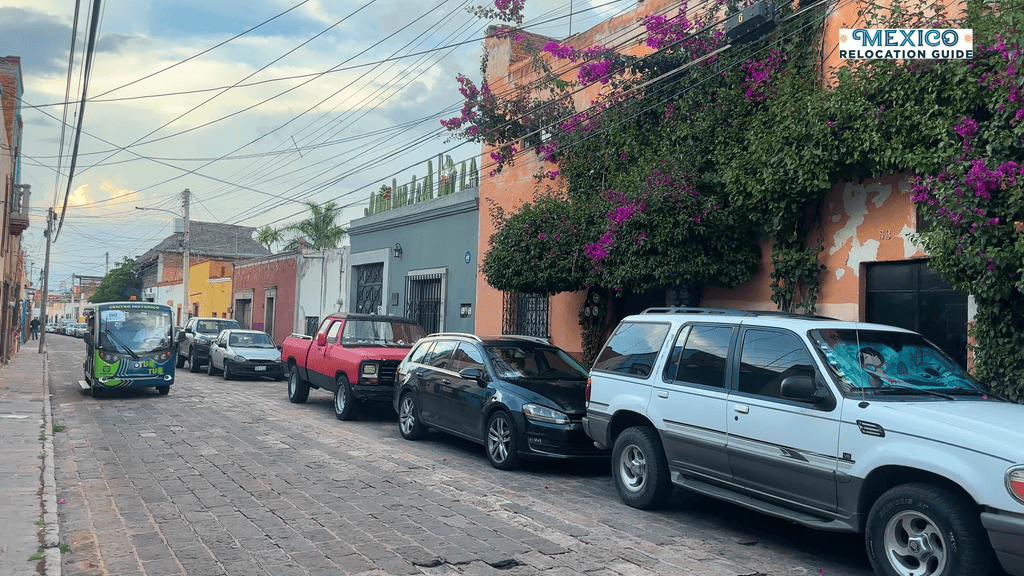
How Much Are Utilities in Querétaro?
One of the benefits of Querétaro’s mild weather is that you may spend much less on electricity compared with hotter cities.
Here are some typical estimates discussed in our video for a two-person household.
| Expense | Estimated Cost in USD |
|---|---|
| Electricity | $25–$50 every two months |
| Water | $10–$20 per month |
| Gas | $30–$45 per month |
| Home internet | $30–$45 per month |
| Purified drinking water | $2–$3 per 20-liter jug |
For basic utilities, you could budget around $90–$130 USD per month, depending on usage and what’s included in your rent.
Many landlords include some or all utilities in the monthly rental price, so always ask before signing a lease.
Important: Water Supply in Querétaro
One issue you should know about is water availability.
Querétaro is in a dry region, and some neighborhoods have experienced water interruptions during periods of drought.
When looking at rentals, ask whether the property has a tinaco (rooftop water tank) or cisterna (underground water storage tank).
These provide backup water storage when the regular supply is interrupted.
You should also ask the landlord whether the neighborhood has a history of water shortages.
And as in many parts of Mexico, plan to use purified drinking water unless you have a properly maintained filtration system.
Grocery Shopping in Querétaro
If you enjoy cooking at home, you’ll have plenty of shopping options.
Querétaro has everything from traditional Mexican markets to large supermarkets and familiar stores such as Costco, H-E-B, and Walmart.
At local markets, you can buy fresh produce, meat, eggs, cheese, tortillas, and prepared foods.
These markets are often less expensive than larger supermarkets, and they’re a great way to become familiar with everyday Mexican life.
For imported products and familiar American brands, you’ll find plenty of options at Costco and H-E-B.
My recommendation is to shop at a mix of local markets and larger grocery stores.
You’ll often save money while still having access to the products you enjoy.
Healthcare in Querétaro, Mexico
Healthcare is one of Querétaro’s biggest advantages, especially if you’re retiring in Mexico or want easy access to private medical care.
You’ll find private hospitals, specialists, laboratories, pharmacies, and smaller medical clinics throughout the city.
Affordable Everyday Medical Care
For routine medical needs, you can visit a consultorio médico, which is a small doctor’s office often located next to a pharmacy.
Chains such as Farmacias Similares and Farmacias del Ahorro offer access to these types of clinics.
A basic consultation may cost around $5 USD, depending on the location and service.
These clinics are useful for minor illnesses, basic checkups, and common medical concerns.
You generally don’t need health insurance to use them, and many accept walk-in patients.
Private Hospitals and Specialists
For more advanced medical care, Querétaro has major private hospitals such as Star Médica.
You’ll find services including cardiology, orthopedics, maternity care, surgery, and many other specialties.
Some doctors and specialists speak English, although you shouldn’t assume every medical professional will be bilingual.
For very rare conditions or highly specialized treatments, you may still need to travel to a larger medical center in Mexico City.
What About Health Insurance?
If you’re moving to Mexico, I strongly recommend researching your healthcare options before you arrive.
Private medical care can be much more affordable than in the United States, but major surgeries, accidents, and serious illnesses can still become expensive.
You may qualify for public healthcare options, or you may prefer private Mexican or international insurance.
The right choice depends on your age, medical history, budget, and coverage needs.
Inside our Complete Mexico Relocation Guide, we explain how to navigate healthcare in Mexico, research medical providers, and connect with vetted health insurance brokers who understand the needs of foreigners moving here.
Getting Around Querétaro: Do You Need a Car?
The answer depends on where you live.
If you rent an apartment in Centro Histórico, you may be perfectly happy without a car.
You can walk to restaurants, pharmacies, coffee shops, and many daily necessities.
Uber, DiDi, and taxis are also available throughout the city.
Querétaro has a public bus system called Qrobús, which serves many parts of the metropolitan area.
Public transportation can be affordable, although routes and travel times will depend on where you live.
If you choose Juriquilla, Zibatá, or another neighborhood farther from the historic center, having a car may make life considerably easier.
Getting to Querétaro via Mexico City International Airport
Querétaro Intercontinental Airport is approximately 25–40 minutes from many central parts of the city, depending on traffic and your destination, and it began operations in 2004.
It offers domestic flights and international connections, including service to several cities in the United States, and a regional airline also operates there.
Buses run between the airport and the city every 1–2 hours.
Airline routes can change, so always check current flights before planning your trip.
You can also travel between Querétaro and Mexico City by comfortable long-distance bus.
The city has bus connections to San Miguel de Allende, Guanajuato, Guadalajara, Puebla, other major cities, and some services to Mexico City International Airport.
This central location is a big advantage if you enjoy exploring Mexico.
Renting a Home in Querétaro: What You Should Know
Before you fall in love with a rental, you should understand that renting in Mexico can work differently than it does in the United States or Canada.
Many landlords in Querétaro require a póliza jurídica, which is a legal protection service used during the rental process.
Some may also request an aval, a guarantor who often needs to own property in Mexico.
If you’re a newcomer without a local guarantor, certain landlords may accept other arrangements, such as a larger deposit or rent paid in advance.
However, these options aren’t guaranteed, and requirements vary by landlord.
You should also ask about maintenance fees, pets, included utilities, and the conditions for getting your deposit back.
Most importantly, never send money for a rental without properly verifying the property, the person renting it, and the rental agreement.
If you’re new to renting in Mexico, I recommend reading our Rentals in Mexico guide.
It also gives you access to our free rental tips email series, where you’ll learn more about finding rentals and avoiding common mistakes.
Pros and Cons of Living in Querétaro
No city in Mexico is perfect, and Querétaro is no exception.
Here are some of the biggest advantages and disadvantages to consider.
Pros of Living in Querétaro
- Excellent weather: Mild temperatures, relatively low humidity, and no coastal hurricane season.
- Modern conveniences: Private hospitals, shopping centers, universities, and an international airport.
- Beautiful historic center: Walkable plazas, colonial architecture, restaurants, and major cultural events, including the Festival of Santiago de Querétaro, which lasts eight days during Holy Week.
- Central location: Easy access to Mexico City, San Miguel de Allende, Guanajuato, and other destinations.
- Different housing options: Choose between historic apartments, modern condos, and spacious gated communities.
- Nature– Querétaro has 600 hot springs, popular for relaxation.
The city’s cultural calendar can draw very large crowds; in 2009, that festival included 110 events and 3.15 million attendees.
Querétaro is also considered one of Mexico’s more attractive cities for families and professionals seeking a good quality of life, and it is often viewed as one of the safest cities in the country thanks in part to its low crime rate.
Cons of Living in Querétaro
Traffic can be frustrating. The city has grown quickly, and commuting between certain neighborhoods can take longer than expected.
Water shortages are a concern. Some areas have experienced interruptions during dry periods, so backup water storage is important.
You’ll hear less English. Compared with San Miguel de Allende or Puerto Vallarta, Querétaro has a smaller foreign community. Learning Spanish will make your daily life much easier.
The altitude may be difficult for some people. At around 6,000 feet, Querétaro may not be ideal if you have certain heart or lung conditions. Speak with your doctor if altitude is a concern.
Rental requirements can be more formal. Some landlords require a guarantor, a legal rental policy, or additional documentation.
Not every neighborhood is walkable. You may need a car if you choose a newer community outside the city center.
And while Querétaro is often described as relatively safe, it’s still important to research individual neighborhoods and use normal safety precautions.
Explore Querétaro Like a Local With a Private Relocation Tour
Watching YouTube videos and reading articles can help you narrow down your choices.
But nothing compares to actually visiting a city and seeing what daily life might look like for you.
That’s why we offer Private Relocation Tours in Querétaro.
These aren’t sightseeing tours. They can also help you explore natural wonders and nearby destinations beyond the city.
They’re designed specifically for people who are considering moving to Mexico and want to learn what it’s really like to live in a particular city.
You’ll spend time with a local guide who understands Querétaro and can help you explore neighborhoods that match your budget and lifestyle. Seeing places like Cerro de las Campanas, a peaceful park with panoramic views, or Peña de Bernal can also help you understand the broader area; Peña de Bernal is one of the tallest freestanding stone monoliths in the world.
For example, if you’re deciding between a walkable apartment in Centro and a modern home in Zibatá, your guide can help you see how different these areas really are.
You can also visit grocery stores, explore residential neighborhoods, get familiar with local services, and ask practical questions about daily life. If you want a bit of rest from city research, some people also use extra time to ask about places like Sierra Gorda or Peña Colorado.
Our private tours are generally customized to your interests, and we offer them in more than 60 cities throughout Mexico.
Learn More About Our Private Relocation Tours in Querétaro
Access to our recommended private tour guides and their contact details is included in the Complete Mexico Relocation Guide. Tour fees are separate and paid directly to the local guide.
Moving to Querétaro? Here’s How We Can Help You Do It the Right Way
If you’re seriously considering moving to Querétaro, you probably have a lot of questions.
Where should you live? How do you find a trustworthy realtor? What residency visa do you need? How do you get health insurance? And what happens once you arrive?
You don’t have to figure all of that out on your own.
At Mexico Relocation Guide, we’ve helped thousands of people plan their move to Mexico with more confidence and fewer costly surprises.
And one of the things that makes our Complete Mexico Relocation Guide so special is that you don’t just get information about moving to Mexico. You also get access to the trusted people who can help you make it happen.
Our online guide walks you through the relocation process step by step.
You’ll learn about residency visas, healthcare, renting and buying property, banking, taxes, bringing your pets, moving your belongings, and getting settled in Mexico.
But what I think you’ll find especially valuable is our private directory of vetted contacts across Mexico, including Querétaro.
We connect our clients with trusted professionals, including realtors who can help you find long-term rentals, immigration facilitators, health insurance brokers, and local private relocation tour guides.
These are contacts we’ve researched and vetted so you don’t have to start your search from scratch.
We don’t accept kickbacks or commissions from the professionals in our directory. Our goal is to recommend reliable people, not whoever pays us the most.
And because rules, prices, and procedures change, we continually update our online guide to help you make decisions using current information.
You also get access to our private customer Facebook community, where you can learn from others who are planning their move or already living in Mexico.
With hundreds of five-star customer reviews, we’re proud to be a trusted resource for people who want to move to Mexico the right way.
See Everything Included in the Complete Mexico Relocation Guide