
 Contact
  Account


Thousands of foreigners are moving to Mexico every year, mainly because of the increasing cost of living in the US and Canada. Coupled with the rising tensions in politics that divide the common people. Many are looking for a better life in Mexico! In fact, many Americans are choosing to move to Mexico for its financial benefits and vibrant expat communities.
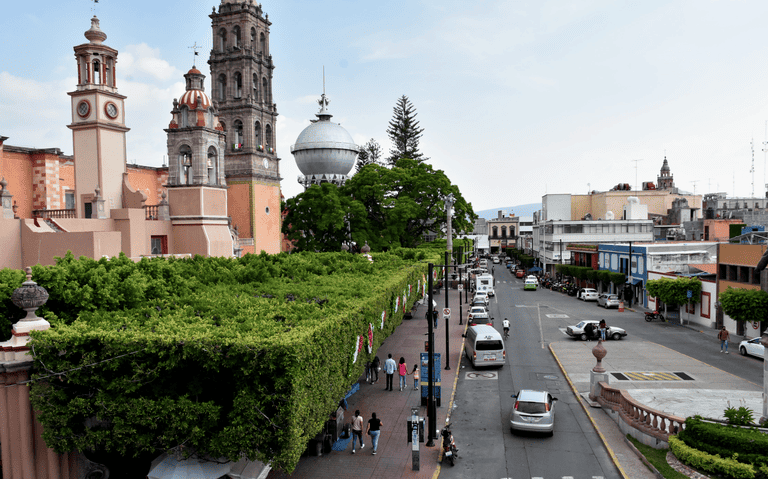
Mexico offers a welcoming environment for newcomers, making it an attractive destination for retirees and expatriates. But moving to Mexico is not as easy as packing your bags, showing up, and starting a new life sipping a margarita by the beach. The Mexican immigration and bureaucracy are challenging, especially with limited Spanish. And you can get scammed by hiring the wrong people. Despite these challenges, many expats find a peaceful life in Mexico by choosing the right locations and exercising caution.
The good news is that you can avoid costly mistakes by following a few steps. And if I was moving to Mexico this year, these are the steps I would take.
We are starting with living in Mexico legally.
1. Do You Qualify For Residency?
The time when expats in Mexico could be perpetual tourists doing border runs every six months is coming to an end. Mexican Immigration is no longer handing out 180-day entries to every qualifying visitor. The most common immigration options for foreigners are the temporary resident visa, permanent resident visa, and tourist visa, and it’s worth reviewing a complete guide to Mexican resident visas so you understand the differences. A temporary resident visa allows you to stay in Mexico for more than 180 days and up to four years, while a permanent resident visa is for those seeking long-term or indefinite residence. A tourist visa is for short-term stays, typically up to 180 days, and does not allow you to work or establish residency.

Getting Mexican Residency doesn’t have to be hard
You need residency to open a bank account, get a driver’s license, get certain private health insurance policies, work in Mexico, and for many other activities.
While there are several ways to get residency, the most common option is through financial solvency. Applicants must provide bank statements to demonstrate economic solvency, meeting the minimum monthly income thresholds based on the Mexican minimum wage. This means you need to show proof of a minimum monthly income or sufficient savings over a specified period. Retirees should note that there is no separate retirement visa, but you can qualify for a permanent resident visa by proving you are fully retired and financially self-sufficient.
If you plan to work in Mexico, you must obtain a work visa, which requires sponsorship from a Mexican employer. The application process for any visa typically starts at the Mexican embassy or local Mexican consulate in your home country, where you must prove your legal status and submit all required documentation.
Residency Qualifications in 2025
For temporary residency, you need a monthly income starting at USD $4300 USD and up to OR USD $75k USD in savings for the past 12 months. There is a disparity because the amount varies depending on which Mexican consulate you apply to.
For permanent residency, you need a monthly income of about $7,800 USD or savings/investments for the past 12 months starting at $273,000 and up to $300k. Again, the requirements depend on which consulate you apply to.
We give you the most up-to-date income requirements by Mexican Consulate. If you’re on the cusp of qualifying, I urge you to get your residency sooner rather than later because the income requirements tend to increase yearly.
And because things are changing so quickly in Mexican immigration procedures (almost daily, it seems), it’s never been more vital for you to apply for residency sooner rather than later. Just because you qualify for Mexican residency this year doesn’t mean you’ll qualify this year or the following, especially with possible changes coming to residency income requirements.
Our advice: apply sooner rather than later. You are NOT required to live in Mexico to remain a resident. So, even if you are moving to Mexico years in the future, I’d recommend securing your residency visa first.
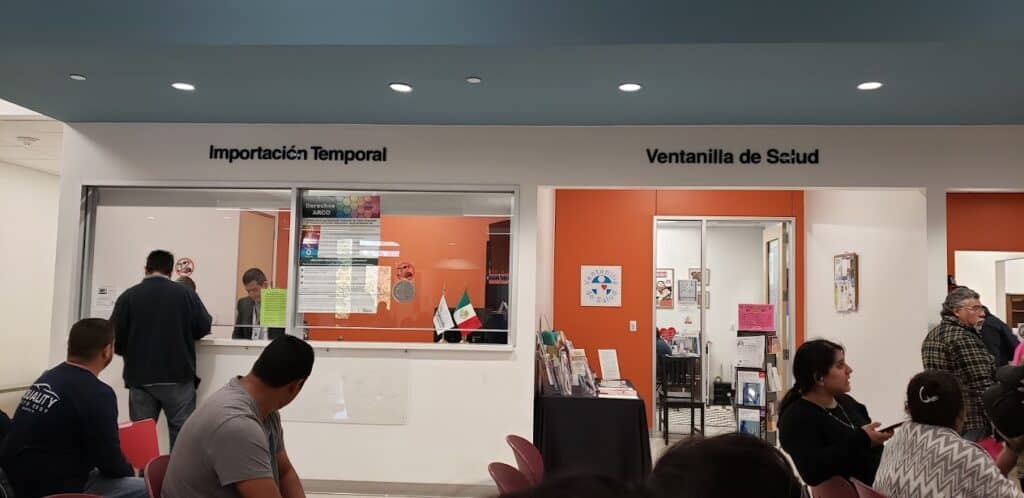
Get The List of Income Requirements for Residency in Mexico By City Here
While it may seem very simple to qualify for residency, unfortunately, the process isn’t. Mexican bureaucracy can be complicated and very inconsistent. Because of this, we recommend hiring an immigration facilitator familiar with local customs, laws, and requirements.
Others may tell you that hiring an immigration facilitator in Mexico isn’t needed.
And while that may have been the case 10 years ago, things change so rapidly today that it’s easy to make a mistake. Oftentimes, the worst mistakes are made by the employees at immigration, who may be poorly trained. So hiring the right person who is up to date on immigration requirements and will know the law better than most is almost a no-brainer.
2. Can You Afford A Move to Mexico?
Mexico is famous for its affordable living. However, the cost of living and moving to Mexico can vary depending on your lifestyle. Make a budget to understand how much you will need to live comfortably, and consider reviewing a detailed breakdown of the cost of living in Mexico and how to live on less. It’s also important to understand currency exchange and manage your finances in Mexican pesos when opening a bank account or making everyday purchases. Here are some cost-of-living comparisons from real people to help you.
Consider the following items:
US citizens should also be aware of double taxation issues, as you may have tax obligations in both the US and Mexico. Consider consulting a tax professional before moving to ensure you comply with all tax requirements and avoid being taxed twice.
Cost of Obtaining Residency in Mexico
While getting residency in Mexico won’t break the bank, it can be costly if you’re not prepared. Here are some of the costs involved in getting residency in Mexico. (in USD)
- Residency Visa- About $600 USD For Temporary Residency in Mexico Per Applicant and Without Hiring An Immigration Facilitator. Including the $54 USD Consular Fee.
- Travel expenses to Mexico – to finish your residency (gas, flights, lodging, meals) $1,000 +
- Apostille/ Certification of documents $20+
- Document Translation $50+
See all current Immigration Fees in Mexico.
These are only some of the top costs of getting residency in Mexico. You may also have to consider where you get your consulate appointment or finish your residency in Mexico.
Some people consulate shop—meaning they travel to a local Mexican consulate that may have sooner appointments or lower income requirements. Choosing a local Mexican consulate with more favorable appointment availability or requirements can simplify the application process.
Some people also travel to a different INM (immigration) office in Mexico to process their residency faster, which may incur an additional travel expense—another important reason to hire a reputable and recommended immigration facilitator in Mexico.
Cost of Moving Your Belongings and Pets
The type and number of items like furniture will significantly add to your moving costs. Moving to Mexico from the US involves unique logistical and cost considerations, as many American expats make this transition each year. For an average person, moving to Mexico from the U.S. can cost between $5,000-$10,000. If you’re using moving companies, shop around for the best quote.

And because many of us have furry companions, we need to also calculate the cost of bringing them to Mexico.
If they are flying with you, the airlines will likely charge you $300+ per pet if they are in cargo. However, not all pets can fly. And many of our customers decide to hire a private driver from our directory of recommended contacts to bring their pets to Mexico. This can cost $3,000k+ depending on the distance traveled.
Housing
Rent and house prices differ between regions. Big cities in Mexico tend to have more diverse housing options and are popular among expats for their amenities and services. And don’t forget to consider the transaction fees when buying a property in Mexico. Also, most of our customers rent an Airbnb for a month or two while they look for their long term rental. Keep in mind renting on Airbnb will cost 30-50% more than your long term rental. A cost that can add up.
We also recommend you to rent for six to twelve months before buying to ensure it’s where you want to live for a while because selling your home in Mexico is not as easy as just leaving a rental.

Additional Reading: How to Find the Best Rentals in Mexico
**International health insurance**
Mexico offers excellent healthcare at affordable rates. The country provides accessible medical care through both public and private healthcare systems, with private facilities often offering higher standards and shorter wait times, but it’s important to understand five key things about healthcare in Mexico before you rely on it completely. But paying out of pocket can bankrupt you during a catastrophic event. So, it’s a good idea to get private health insurance.
Expats have several health insurance options, including local Mexican insurance, the public IMSS program, and international health insurance plans designed for those living or traveling abroad. Compare two to three quotes from different insurance agents before selecting a policy.
Getting private health insurance in Mexico is difficult after age 70 through a Mexican Carrier. And even though residents can enroll in Mexico’s affordable healthcare program IMSS, this social security medical system can be very limited.
Not only are their facilities and services inferior to private healthcare, but sometimes they run out of essential medications. Also, if you are not suffering from a life-threatening emergency, you will have to wait to be treated.
International health insurance and international health insurance plans offer comprehensive worldwide coverage, making them ideal for frequent travelers or those needing protection in multiple countries. These plans are often more flexible and provide access to high-quality medical care both in Mexico and abroad, compared to local insurance options.
When moving to Mexico, you will quickly realize that many foreigners end up paying out of pocket and having some cash reserves for medical expenses. Or, if they are from the U.S., they have Medicare when they become eligible as a plan B.

Certain pre-existing conditions will disqualify you from health insurance through a lot of Mexican providers. For this reason, you will have to shop around for health insurance companies that cover you in Mexico with pre-existing conditions.
If you have any health conditions, we highly recommend scheduling a telemedicine appointment with an English-speaking specialist in Mexico through a website like Doctoralia. That way, you can understand the costs of medication and ongoing treatment, especially if you plan to pay out of pocket.
Schools
Mexico has both private and public schools with varying costs. International schools are a popular choice among expats for their English-language instruction and global curricula, often providing a smoother transition for children from abroad. Some private schools have special accreditation with schools in the U.S., Canada, and the UK.
If you are moving to Mexico for study purposes, enrolling in a Mexican educational institution, such as a university or language academy, may be necessary to obtain a student visa.
Vehicle
You can buy a car in Mexico or import a foreign-plated car.
Importing a foreign-plated car can cost about $8,000-$15,000. So, look into the costs vs. benefits of both options.
An Overview of Moving Costs:
- Residency Visas-$370 For Temporary Residency Per Applicant and Without Hiring An Immigration Facilitator
- Travel expenses to Mexico – to finish your residency (gas, flights, lodging, meals) $1,000 +
- Cost of Moving Your Household Goods. The average cost of moving your household goods with a moving company is upwards of $5k.
- Cost of Moving Pets- If you fly your pets to Mexico, the airline will charge you a cargo fee. Depending on the airline, this costs $300+
- Cost of Moving Your Family
- Temporary Housing Costs- If you rent an Airbnb while you find your long-term rental in Mexico, expect to pay 30-50% more than your forever home.
- Long-Term Housing—In Mexico, it is common to pay a security deposit and the first month’s rent upfront. In some cases, landlords may want you to purchase a “poliza juridica.”
What Will You Do For Money?
Do you have enough income from social security or savings and investments? Or will you need a new income stream?
Temporary residency visas based on financial solvency don’t come with work rights. So, you’ll need to get a work permit to work in Mexico. US citizens and American citizens must obtain the appropriate work visa to be legally employed by a Mexican company. But remember, Mexico’s wages are nowhere near U.S. wages.
The average wage for a family in Mexico is around MXN $30,000 a month (about $2,000 USD a month, depending on the exchange rate)
Remote working on jobs and businesses is popular among expats. They get the geographic arbitrage benefit of earning in stronger currencies while paying their living costs in MXN.
If you’re from the U.S. and still working, you can take advantage of the foreign-earned income exclusion while living in Mexico, an enormous tax benefit.
Setting Up a Bank Account in Mexico
One of the most important steps to settling into expat life in Mexico is opening a local bank account. Whether you’re planning to make Mexico City your new home, enjoy the laid-back lifestyle of Playa del Carmen, or soak up the rich cultural heritage of San Miguel de Allende, having a Mexican bank account will make managing your finances much easier and your transition far more stress free.
To open a bank account in Mexico, you’ll typically need to present your valid passport and proof of address in Mexico—this could be a utility bill or a rental contract in your name. Some banks may also ask for your residency card, so it’s a good idea to check with your chosen branch ahead of time. Minimum deposit requirements can vary, so be sure to ask about this as well.
When choosing a bank, you’ll find a wide range of options in major cities and expat hotspots. Local banks like BBVA México and Banorte are popular choices, and many offer services in English, especially in areas with large expat communities such as San Miguel or Playa del Carmen. If you prefer to manage your finances online or need access to your funds while traveling, consider banks with a strong digital presence or those with international branches, like HSBC or Citibank.
It’s wise to compare different banks and account types before making your decision. Look at factors such as monthly fees, ATM access, online banking features, and customer service. Some banks cater specifically to American expats and offer tailored services to make your banking experience smoother.
Connecting with other expats can be incredibly helpful during this process. Join local Facebook groups or expat communities in your chosen Mexican city to get recommendations and firsthand advice on the best banks and banking practices. These groups are a great resource for tips on everything from opening your first account to navigating daily life in a foreign country, including which must-have apps for living in Mexico people actually use.
By setting up a bank account in Mexico, you’ll be able to pay bills, receive payments, and manage your finances with ease—giving you more time to enjoy everything this diverse country has to offer. From exploring vibrant street food scenes to discovering the artistic charm of San Miguel de Allende, having your finances in order will help you make the most of your Mexican dream and truly embrace your new life south of the border.
3. Visit At Least Once
It’s not uncommon for people to pack their bags and move to Mexico without visiting. But it’s clear that many of the people who moved without a plan, end up moving back. Mostly because they realize living in Mexico is not for them.

I recommend planning a Mexico relocation tour covering different areas. There’s more to Mexico than vacation destinations like Puerto Vallarta, Cancún, and other expat hotspots, and you can even book private Mexico relocation tours with vetted local guides to explore neighborhoods in depth.
Visiting will help you get a sense of the vibe, facilities, and weather. You can also see if you feel safe in each place. Avoid focusing only on the cheapest places to live and find where you’d be comfortable, even if you’re attracted to affordable cities in Mexico where you can live on about $2,000 a month.
To plan the scouting trip:
- Make a list of your needs and select the areas that match them.
- See how you’ll get around the country. You can fly between some cities, drive (rent a car), or even take luxury buses like ADO, ETN,Omnibus de Mexico. Within cities, there are taxis, rideshare options like Uber and Didi, and budget-friendly options such as colectivos in Mexico.
- Line up some rentals to visit. It’s easier to find hidden gems in person.
- Visit schools, healthcare facilities, restaurants, and other places of interest.
- Join Facebook groups like the expat groups of different cities. That way, you can get to know others in the area and pick up some tips, including what everyday life and common neighborhood noises in Mexico are really like. Just be careful of asking for legal advice here- it’s often WRONG!
- And if you want to learn more about what it’s really like to live in certain areas without having to rent a car or plan where to go- we offer Relocation Tours. We won’t sell you anything. So you can enjoy your visit without stress.
4. Plan Your Move
You’re almost there!
Now let’s look at a few things to tick off ahead of your moving trip:
Move to Mexico with Pets
Mexico’s National Service for Health, Safety and Agri-food Quality, SENASICA, says pets (dogs and cats) coming from the U.S. and Canada don’t need a health certificate. Check their guidelines about how to transport pets and the food allowance.
If you’re flying, the airline may have its own rules and may require a health certificate. This is completely normal. To price out what you must pay, from getting a health certificate to buying a new kennel to paying your dog’s flight cargo fee, check the airline’s pet transport rules.
Speak to moving companies and pet transport companies if needed.
Some people don’t want to fly their pets in cargo. And understandably so. It’s very stressful for your furry friend. Not to mention that some airlines have strict restrictions on the breeds of animals they allow in cargo.
For this, we recommend hiring a pet transport company. But the prices can vary so much that you really need to get a few quotes.
If you need a recommendation, we have a directory of private drivers who make regular trips between Mexico, the USA, and Canada. Check out our
Will you drive or fly?
Consider the distance, the luggage, the number of persons and pets, and the costs before deciding.
5. Hire The Right People To Help You- And Make It Easier For You
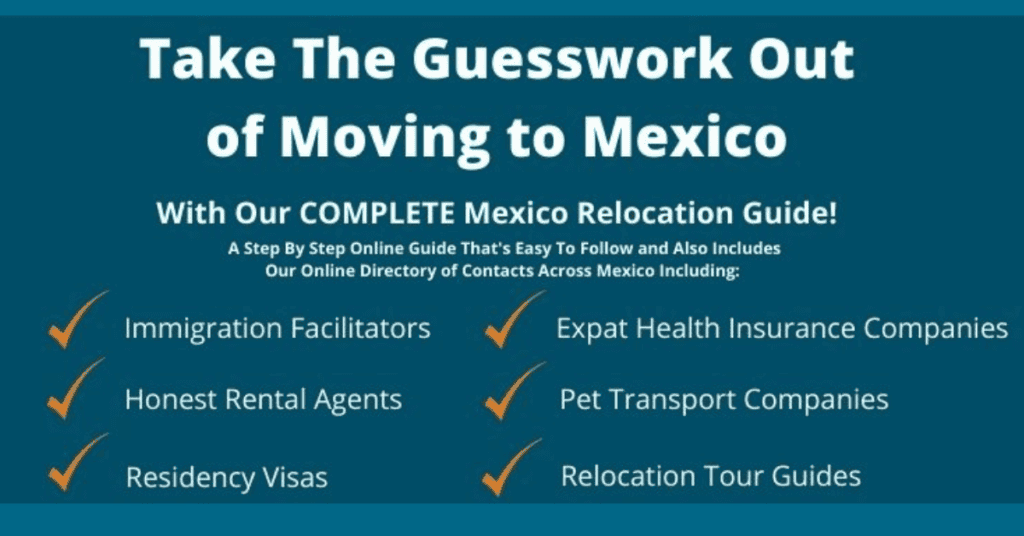
It’s tempting to do it yourself and save money. But it increases your risk of making costly mistakes. The right service providers can help you make a stress-free move to Mexico.
Here’s our Complete Mexico Relocation Guide to learn the most important basics about moving to Mexico, plus an in-depth Mexico Relocation Guide to help you move and retire the right way. You will also get my directory of recommended contacts for immigration services, rentals, real estate, relocation tour guides, health insurance, moving companies, pet import, and much much more.