 Contact
  Account


Obtaining your Mexico Resident Visa is not as easy as some think. We know how hard it can be to navigate Mexican bureaucracy. And if you don’t understand perfect Spanish, the second part of your residency process in Mexico can be a nightmare.
This guide is intended for foreign nationals seeking to obtain a Mexico residency visa, as Mexico’s immigration laws apply to both Mexicans and foreigners.
We hear stories about people overstaying their visas or leaving the country every six months to avoid getting a Mexican Resident Visa.
Then, they are surprised when they get caught, fined, or turned away at the border. And the Mexican National Immigration Institute (aka INM) is starting to crack down on perpetual tourists.
If you are considering moving to Mexico, you should understand how to get a Mexican Resident Visa legally. And if you’re coming in as a tourist to check it out before moving here, you should also know how long you can stay.
Either way, the following information should help you decide what to do to be in Mexico legally. If you’re also wondering about practical matters like shoe or clothing sizes, check out this quick guide to sizes in Mexico.
That’s why I created this QUICK and FREE Guide to Mexican Resident Visas
But first, let me explain some of the terminologies for tourists vs. residents because it matters in your understanding of the process.
Tourist Visa/FMM
You might be coming to Mexico to check it before making big decisions. That’s a great idea! If you want to visit Mexico as a tourist, it’s important to understand the entry requirements. I suggest exploring this beautiful and large country before getting a Mexican resident visa.
And why not? As a tourist from the USA, Canada or one of the countries below, you can stay in Mexico for up to 180 days as a tourist. You are issued a visa upon arrival if you fly to Mexico and you don’t need to apply for a visa before hand. These are all the “no visa required” countries to travel to Mexico.
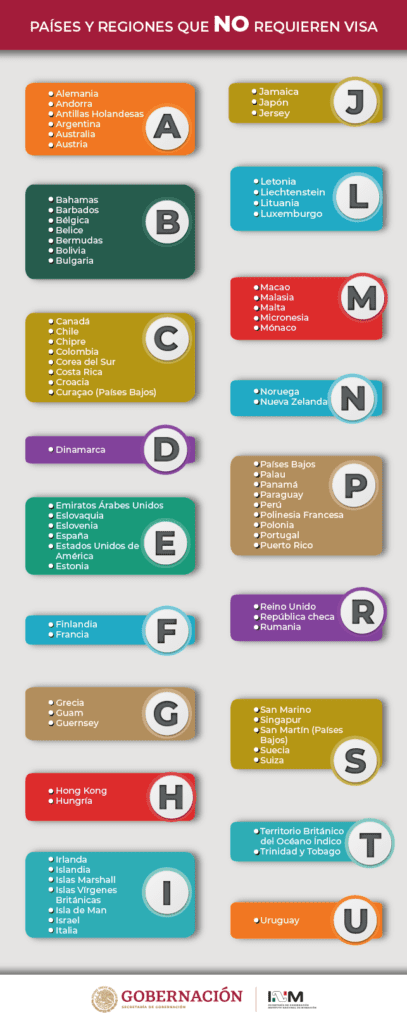
But remember that even though you can be given up to 180 days, there is no guarantee you will get the full 180 days. There have been many cases where tourists have come to Mexico and were given 30, 20, or even 15 days on their tourist visas.
Many people are surprised when they come to Mexico with plans of being here for more than a few weeks or months and are given only days on their Mexican FMM.
Some people may have brought their pets, household goods, or something else they assumed could stay longer. Or maybe you’ve made reservations at an Airbnb for five months and may lose out on some of that expense.
Coupled with that is the unfortunate and terrible advice some “experts” give their audiences on YouTube, advising you to just overstay your FMM. But believe me when I tell you that what they don’t explain is that you can easily get detained by immigration authorities in Mexico if you are caught with an expired FMM and be deported back to your country. While that happens, you will be detained in an immigration jail in Mexico. Trust me, you won’t like it. This isn’t meant to scare you, but rather to give you a realistic view into the risk you run.
Flying Into Mexico
Some of you will be flying into Mexico to finish your residency visa process.
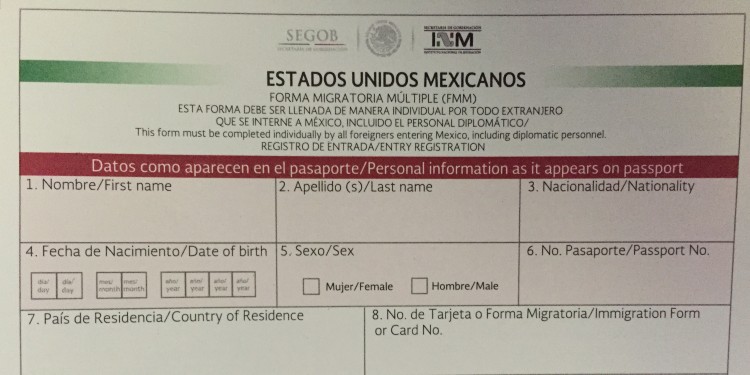
The fee for an FMMD is usually included in your ticket. Most likely, an agent will give you this form to fill out before entering Mexico. You’ll need to fill out a declaration form before arriving in Mexico, and you only need to fill one out per family.
If you’re coming in to finish your residency visa in Mexico, you’ll need to let an agent know they must mark you as “canje.” It’s super important, and I will cover that in detail later.
If you’re coming in as a tourist, an immigration officer will stamp your passport and issue you a slip with the time or days you are allowed to stay in Mexico. If you need to obtain a visa before your visit, you may need to schedule an appointment at a Mexican Consulate before your trip.
This is up to the immigration agent to process your FMMd upon arrival. You must check the time they write into your FMMd when you arrive in Mexico so that you don’t accidentally overstay your visa permit. Please remember that all airports will issue Digital FMMs (FMMd).
Driving Into Mexico
A lot of people moving to Mexico decide to drive across the border. Makes sense to me. You might have pets. You might have household goods. Or this vehicle may be your transportation method in Mexico. And if you decide to get your residency in Mexico, you might need a car.
If you decide to drive to Mexico, you’ll still need to get an FMM. An FMM costs $983 MXN as of 2026.
If you’re coming in as a tourist, you might read online that no one checks this while driving in Mexico. While this may be the case most of the time, you are required by law to get one upon arrival. Getting caught without one could cause trouble for you while you’re in the process of getting your residency visa in Mexico in the future. And no one at the border in Mexico forces you to get an FMM.
So it’s your responsibility to either buy one online ahead of time or get it at the border when you cross.
If you’re coming in for canje, you must get an FMM at the border crossing you drive on. Make sure they mark you as Canje and not as a tourist on your Mexican Resident Visa stamp.
Where to Get An FMM On The Land Border?
When you drive across the border, you have to find the nearest INM office. Usually they are at the land border. Once you register your entry to Mexico, an immigration officer will give you an FMM for up to 180 days if you are from one of the “no visa required countries” and coming in as a tourist.
But suppose you’re coming in as a resident.
In that case, it’s extremely important to let an agent know you are coming in as a resident and not a tourist if you are in the process of residency in Mexico (also known as “canje”).
If they mark your FMM as a tourist, your Mexican Resident Visa will no longer be valid, and you will have to start again. So don’t let an INM agent brush you off.
Getting a TIP permit for your car
You must also apply for a TIP if you drive your car across the border. (Temporary Vehicle Permit) A TIP allows your foreign-plated vehicle to be driven while you are in Mexico.
The cost of a TIP is MXN $962 MXN, approx. $53 USD– depending on the exchange rate. And you have to pay a deposit, which ranges between $300-500 USD, depending on the vehicle.
You can ONLY apply through Banjercito, but I found the process on their website to be very easy!
And if you like to plan, you’ll be pleased to know that you can get your TIP permit from 7 to 60 days before travel. However, we do not recommend getting it weeks in advance because you never know if you will use that same car.
The only time you are not required to apply for a TIP is to drive your foreign plated car in the free zones of Mexico which includes all of Baja California and Baja California Sur, Rocky Point, and Quintana Roo.
Residency Visas in Mexico

Our clients getting their residency approval at the Philly Mexican consulate.
If you plan to stay in Mexico for more than 180 days, you must apply for a temporary or permanent residence visa. And yes, you can get deported if you’re caught overstaying your visa. If you only want to be in Mexico temporarily, you must leave by the 6-month mark and surrender your FMM.
The most popular visas for ex-pats are either the temporary resident visa (residente temporal) or the permanent resident visa (residente permanente). There are different visa types available for residency in Mexico, each designed for specific groups such as professionals, students, or family members, with their own requirements and application processes.
Depending on your situation, you may be eligible for one or both. I’ll explain how to determine the right one for you and how to apply.
Solvency Requirements for Mexican Temporary Residency
For temporary residency, the following formula is how most consulates calculate their solvency requirements. We have an approximate amount in USD based on an exchange rate of 18MXN to 1 USD and current UMAs at 117.
To satisfy the income and savings requirements, applicants can demonstrate financial means through monthly income, savings, or investments, and NET balances in their bank accounts.. Consulates require proof of a minimum balance in bank or investment accounts over a specified period.
Monthly Income Requirement- Bank Statements for the past 6 months
- Formula: 680 x UMA
- Total: ~ $4,325 USD/ $5,566 CAD
Savings Requirements- Bank statements for the past 12 Months with the minimum requirement
- Total: ~$73,000 USD/ $93,860 CAD
- Formula: 11,460 x UMA
Income requirements can vary by consulate, so it is important to be able to qualify financially according to the standards set by each consulate.
Solvency Requirements for Mexican Permanent Residency
For permanent residency in Mexico, the economic solvency requirements are typically higher, and some consulates require you to have a pension/social security benefits or be of retirement age (over 60) to qualify for a Permanent Resident Visa. However, different consulates in the USA have different rules.
Monthly Income Requirement- Bank Statements for the past 6 months
- Formula: 1,142 x UMA
- Total: ~$7,400 USD/ $9331 CAD
Savings Requirements- Bank statements for the past 12 Months with the minimum requiremen
- Formula: 45,850 x UMA
- Total: $298,00 USD/ $375,300 CAD
The income requirements vary by consulate and are NET (after taxes).
Additional Dependents
If you have direct economic dependents (spouse, parents or children) you must prove the family bond with a marriage license and/or birth certificates.
Accurate birth and marriage certificates are essential identification documents required for residency and citizenship applications in Mexico, and any discrepancies can cause delays or obstacles. You must also prove financial solvency for them by adding 220 x the current UMA amount. Or about $1,400 USD monthly.
Family members, including a common law partner, may be eligible for residency through family unity/unification. In these cases, you will need to provide official identification and documentation, such as marriage certificates or legal declarations, to prove your relationship.
Of course, this also varied according to the consulate. Some consulates require each applicant to qualify individually. This means they may require each applicant to prove they have the minimum economic solvency requirements. You must verify the requirements with the Mexican consulate to which you intend to apply.
If you are a couple and each person doesn’t meet the minimum requirements, don’t worry! As long as one spouse can obtain Mexican residency, the other spouse can be petitioned from within Mexico without having to prove economic solvency. This is known as family unity/ unification.
What Are UMAs?
UMAs are Unidad de Medida y Actualization, and its a measure used by the authorities to calculate a variety of internal fees like fines, taxes, interest rates, and in this case solvency requirements.
UMAs tend to increase at the rate of inflation, or about 2-5% yearly. They usually are announced early by INEGI every year but do not go into effect until February.
For the purposes of a Mexican Residency Visa, UMAs are part of the formula used to calculate solvency requirements each year.
Temporary Residents (Canje)
The first part of your residency process will almost always start in your home country. You have to secure a Mexican consulate appointment, and they will check to see if you qualify for residency in Mexico. The cost of this consular appointment is always $56 USD/ $80 CAD or the equivalent based on your home country’s currency. It is non-refundable regardless of whether you are approved or not.
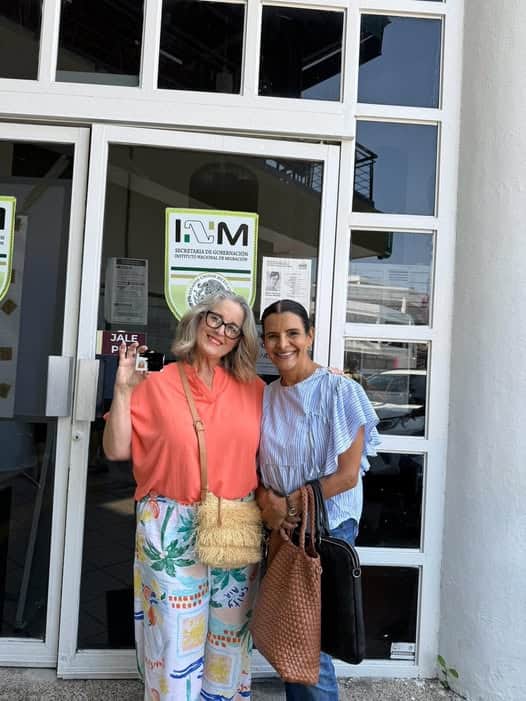
The second part of the process takes place in Mexico and is known as CANJE.
Most temporary residents are initially given their residency cards for one year.
You can renew your residency card UP TO 30 days before it expires. Remember that dates in Mexico are formatted DD/MM/YYY. For example, the card below expires on August 9th, 2023.

If you are outside of Mexico and your temporary residency expires, you have up to 55 days to renew it after its expiration. Once you enter Mexico, you have up to 5 days to start the process at the INM office where you did your canje.
After the first year, you must renew your residency visa and can only do so for up to 4 years. You must renew within Mexico, and you can start the renewal process up to 30 days before it expires.
After 4 years, you can apply to make a switch from temporary to permanent residency. This also has to be done within Mexico.
Work Permit for Temporary Residents
If you wish to work in Mexico as a temporary resident, you must obtain permission to work from INM. Even if you rent an Airbnb in Mexico as a temporary resident, you have to ask INM for permission to work- because you are generating an income.
Permanent Residents are permitted to work without having to process any additional permits. You are supposed to notify INM of your intent to work and what you plan to do.
Permanent Residents
If you are given a permanent residency at the Mexican Consulate that approved your residency, your visa is indefinite and does not need to be renewed.
When you come to Mexico, you pay this amount to finish your process at the INM offices.
Documents Required for Residency
Applying for residency in Mexico—whether you’re seeking a temporary resident visa or a permanent resident visa—means gathering a set of important documents. The exact paperwork you’ll need can vary depending on your personal situation, the type of residency you’re applying for, and the requirements of the Mexican consulate or local immigration office where you submit your application. Here’s a comprehensive checklist to help you prepare for your residency in Mexico:
- Valid Passport: Your passport should be valid for at least six months beyond your intended stay in Mexico. Make sure it’s in good condition and has blank pages for visa stamps.
- Completed Application Form: Download and fill out the official application form for your chosen visa type. This form is usually available on the website of the Mexican consulate or embassy in your home country.
- Proof of Economic Solvency: To prove you meet the minimum monthly income or savings requirements, you’ll need recent bank statements, investment account summaries, or documents showing regular income. The specific amounts required for economic solvency depend on whether you’re applying for temporary residency or permanent residency, and can vary by consulate.
- Original Birth Certificate: An original birth certificate (and sometimes a certified translation) is often required, especially for family unity applications or when applying as a dependent of a Mexican citizen or resident.
- Marriage Certificate: If you’re applying as the spouse of a Mexican national or another resident, you’ll need to provide a marriage certificate. For common law unions, additional documentation may be required (see below).
- Divorce or Death Certificate: If you are widowed or divorced, and your marital status is relevant to your application, you may need to provide these documents to clarify your current status.
- Visa Fee : You’ll need to pay the visa application fee at the consulate or embassy.
- Photographs: Recent, passport-sized color photos are required. Check the specific size and background color requirements with your local Mexican consulate.
- Common Law Union Documents: If you are in a common law relationship, you may need to provide a statutory declaration or affidavit, along with evidence of cohabitation (like joint bank accounts or utility bills in both names).
What Is The Process?
For most expats, you’ll have to start the process for a permanent visa in your country at a Mexican Consulate. You can apply at a Mexican consulate abroad, where you will need to demonstrate income or savings to meet the requirements set by the consulate. Once granted a permanent resident visa, you must go to Mexico to finalize the process.
Your permanent visa is valid indefinitely. You don’t have to renew it as you do with a temporary visa. You’re also allowed to work without applying for a work permit. However, you must tell INM if you have a job offer in Mexico.
Fill out the application in English with this application form below
https://intranetdgsc.sre.gob.mx/images/stories/lineamientos/SOLICITUD_VISA_EN_JUL_15.pdf
Mexican Residency Through Family Unity
The same applies to the temporary visa; it is valid for up to 180 days, and once you arrive in Mexico, you have up to 30 days to exchange it for a permanent resident card. This is known as CANJE.
For spouses or family of a foreign Mexican resident, you only have to prove an additional $1400 USD approximately if you start the process at a Mexican consulate.
The spouse of a Mexican citizen, does not need to prove financial solvency if starting the process at a Mexican consulate.
However, if you start the process directly at the INM offices in Mexico, the dependents of a Mexican national or Mexican citizen do not need to prove financial solvency.
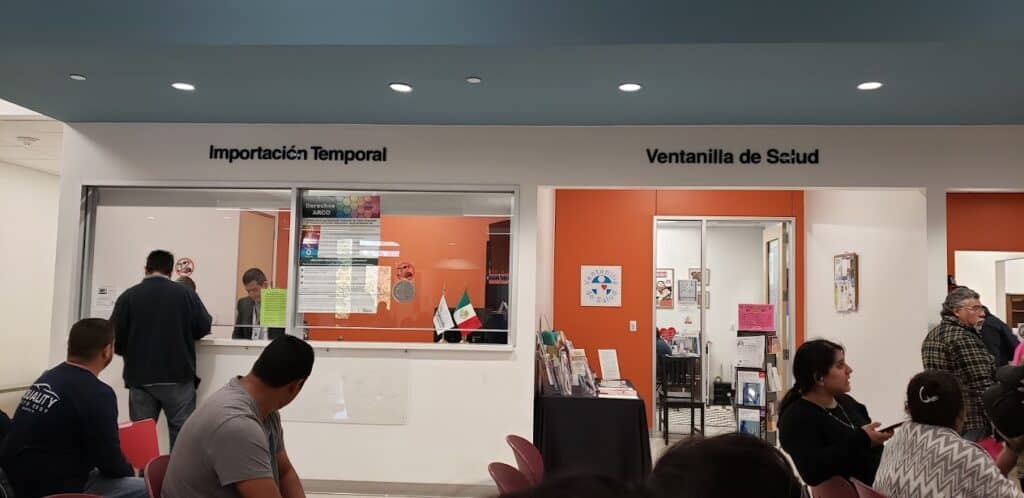
For more information on how to get residency through family unity, we wrote this guide.
Temporary Residency (Residente Temporal) Application:
Foreigners may apply for Temporary Residency (Residente Temporal) if they are:
- The spouse or legal partner of a Mexican citizen or Mexican temporary resident. Spouses of Mexican nationals obtain a 2-year temporary residency initially. Afterward, you can apply to obtain a Permanent Resident Visa.
- The child of a Mexican temporary resident (usually under 18 and unmarried)
- Parent of a Mexican temporary resident
- The adopted child of a Mexican temporary resident (usually under 18 and unmarried)
Permanent Residency (Residente Permanente) Application:
Foreigners may apply for Permanent Residency (Residente Permanente) if they are:
- The parent of a Permanent Resident
- The child of a Permanent Resident card (Children/dependents must be under 18 and not married)
- The adopted child of a Permanent Resident (Children/dependents must be under 18 and not married)
- Your child was born in Mexico and is a citizen
Successful applicants will be granted permanent resident status in Mexico.
For this process, you can apply at either a Mexican Consulate near you or start the process in Mexico.
Also, current Mexican Temporary Residents may apply to exchange their Temporary Residency Visa for a Permanent Residency Visa after 4 years from Mexico- without having to prove economic solvency again.
Immigration Fees
There are a couple of fees associated with applying for and obtaining a Mexican Residency. First there is the Consulate fee, which by the way changes yearly.
You also have to consider the fees for INM to process your Canje, Family unification, or other immigration processes.
For the most up to date immigration fees, go here.
Consulate Shopping
If your local Mexican consulate doesn’t have appointments, imposes higher solvency requirements, or just flat-out denies you; you’re free to do what is known as “consulate shopping”.
Do your homework, confirm they’ll see you, meet their requirements, and arrive with every document in perfect order. That extra legwork often turns a rejection into the residency sticker you’re after. Because that is just the way the system works. 😉
If you were denied and want to try again fast
- There’s no mandatory cooling-off period. Meaning you can go to another consulate right away.
- Fix the reason for the denial first (insufficient funds, missing originals, wrong documents, no name change affidavits, etc.).
- Prepare to show stronger evidence or a different financial path (e.g., switch from income to savings. Don’t move money around in your accounts prior to your appointment- this can raise red flags).
- Keep your story consistent; officers see repeat applicants all the time and appreciate clear explanations.
How Long Does The Process for Residency Visa Take?
So here’s the reality; your timeline mostly comes down to two things: how fast you can get a consulate appointment, and how quickly you can gather the right documents to schedule and attend an apppointment.
Some consulates can get you in within a week, while others might have you waiting a few months. Because all consulates vary a bit. After your interview, it typically takes a day or two for the consulate to give you a residency visa sticker.
Although, some consulates can take up to 10 businesses days. Even though this isn’t very common. This residency visa sticker is valid for up to 180 days. Which means you have up to 6 months to travel to Mexico and do Canje.
However, once you enter Mexico with that sticker on your passport the first time, the clock starts.. and you’ve got 30 days to finish the CANJE process with immigration (INM), which is what turns your visa into your residency card.
All in, most people are looking at a timeline somewhere between about 2 months on the fast end, to 4–6 months if appointments are backed up where you live, and if you travel to Mexico for Canje pretty quickly.
This is exactly why planning ahead makes such a big difference!
Having A Mexican Resident Visa Has Benefits!
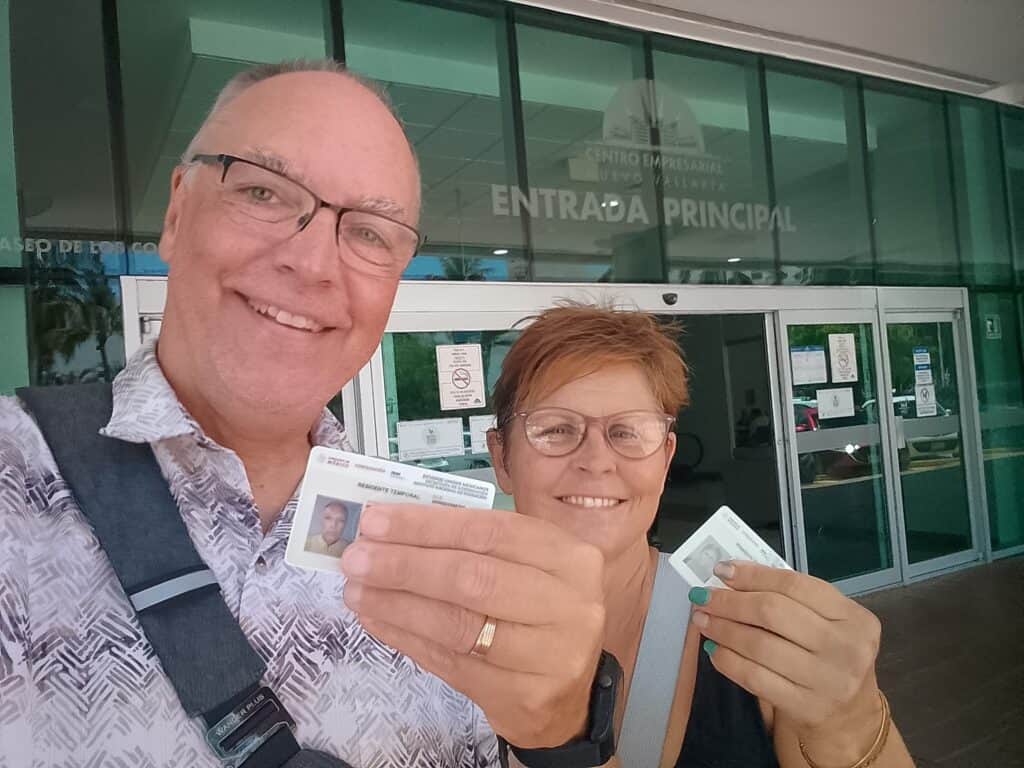
But what if you’re unsure if you plan to live in Mexico full-time? That’s ok! You don’t have to live in Mexico full-time to remain a resident of Mexico. The only caveat is that if you become a temporary resident, you must come back in person to renew it. So, if you think retirement or living in Mexico might be in your future, I encourage you to look into residency sooner rather than later.
There are some additional perks of being a resident in Mexico, such as:
- You can come in and out of Mexico as you’d like
- Residency facilitates opening a bank account in Mexico
- You can bring your foreign-plated car free of import taxes (Temporary only)
- You can bring your household goods to Mexico free of import taxes
- You have access to Mexico’s low-cost healthcare through the Mexican Social Security Institute (IMSS)
- Many private healthcare insurance companies require you to be a resident
- You can apply for a Mexican driver’s license
- You can work in Mexico or run a business in Mexico
- You can register/nationalize a vehicle in Mexico
- Reduced capital gains taxes owed when you sell a property in Mexico
- Discounts for locals only
- The cost of getting a residency is very affordable compared to other countries.
- You can bring pets with you long-term
- You can invest in Mexico’s CDs, which currently have a great ROI
- And so many more!
Tips For Applying Under Economic Solvency
A question we get from time to time is, “Should I apply for residency while I am working or after I leave my job/retire?” Here are my two cents:
If you’re applying for Mexican Residency under economic solvency, we recommend applying while you are still working in most cases. This is especially true for those who will not be retired and will not be using savings/investments as their proof of solvency.
It’s always better to demonstrate to the consulate that you are earning a steady income so they will consider your approval. It’s harder to explain that you may be financially independent while you’re not retired for them to consider your approval.
I’m not saying this is 100% always the case, but in our experience, we recommend applying while you are still generating a regular income. Also, if you are applying based on monthly income, and you plan to quit your job after receiving your residency, DO NOT volunteer this information to any consulate. It’s a quick way for them to consider that you will no longer have this solvency, and they can deny you.
To support your application for residency under economic solvency, be sure to prepare the following documents as required by the consulate.
Dual Citizenship
For foreigners born to a Mexican citizen, you are entitled to dual citizenship and do not need to apply for a residency visa.
To apply, you must make an appointment at a Mexican consulate and bring with you:
- Birth certificate of the person to be registered and two copies. It must be the full version, showing the parents’ birth dates and the registrant’s birth time; this is known as the Long-Form. Only a different version of the certificate will be accepted if the parents’ names appear in full, exactly as they appear on their Mexican birth certificate.
- Document proving Mexican nationality of one of the parents and two copies of each. This includes your parent’s birth certificate, Mexican passport, or consular registration. Preferably, submit birth certificates of both parents if both are Mexican.
- If you are the applicant, and you changed your last name so it no longer matches your Mexican parent last name, you must present a marriage certificate and two copies.
- If the applicant is under 18, then you also need valid identification for both parents and two copies of each are required. Mexican identification (passport, consular registration, voter ID) is preferred. Foreign identification is acceptable as long as the parents’ names appear exactly as they do on their birth certificates.
Appointment Scheduling
- This service is usually offered by appointment only.
- The appointment must be scheduled via WhatsApp by sending a text message to 1 424 309 0009 or through the website https://citas.sre.gob.mx/
- If you decide to schedule the appointment through the online portal, you will need to create an account to access the system.
- When scheduling your appointment, you must select the “civil registry” option. If you do not see this option, it is because there are no appointments available at that time, and you will need to schedule an appointment for the following Wednesday at the indicated time.
There is no fee to process your dual citizenship, and if everything is in order, your Mexican birth certificate will be delivered the same day. However, to process your Mexican passport, you do pay the passport fees, and a separate appointment is required.
You can fill out the application for dual citizenship registration here.
Should You Hire An Immigration Facilitator?
Hiring an immigration facilitator can save you weeks of frustration, especially if you don’t speak fluent Spanish or can’t secure a consulate appointment. An immigration facilitator can guide the interested party through each step of the residency visa application process, ensuring all requirements are met. We’ve vetted trustworthy, affordable facilitators across Mexico who speak English and Spanish, know the best INM offices, and can guide you from start to finish.
Get access to our vetted immigration facilitators in Mexico.
Mexican Bureaucracy Is Challenging
Ask any local or foreigner living in Mexico what they think about Mexican bureaucracy, and I guarantee you will get a few eye rolls. It’s one of the most frustrating things you will have to deal with when you move to Mexico, but trust me, once you learn to accept that nothing will be super easy, you will live a happier life.
During the residency application process, applicants will need to interact with Mexican authorities, who are responsible for issuing visas, processing residency applications, and enforcing immigration policies.
Mexican government offices sometimes use very old-school procedures for handling immigration, and it is no exception.
And while doing the process on your own isn’t impossible, knowing and hiring the right people to help you can save you time, frustrations, and money.
Many immigration offices in Mexico only take online appointments. From renewals to canje to family unification processes, you won’t be seen if you don’t have your online appointment confirmation. Many people don’t realize this. And they might come to Mexico thinking they might be able to finish their residency process in a matter of days. However, they discovered they needed to invest about 2-4 weeks or until an appointment was available. But what happens if you have a job to return to? Or pets or family?
It’s also not uncommon for some immigration offices in Mexico to run out of plastic. So what could have taken 1 day to complete might now take 3-4 days.
Knowing the right facilitators and having access to the right information can help you avoid some of these surprises. You have to keep in mind they do this for a living. They are at the immigration offices daily. They know what’s happening in real time. Plus, they can help you shorten your processing times and help you avoid unnecessary frustrations.
You’re paying for that when you hire a good immigration facilitator. Someone who can help guide you. Someone who knows the local procedure. What’s your time worth to you?
However, not all immigration facilitators are created equal.
And if you don’t know what to look for, you could get scammed. I see it all the time. “Reputable” immigration facilitators recommended by other “experts” end up wasting that person’s money or time.
Not sure which is worse. I’ve seen people lose money because their facilitator made a crucial error and can’t fix it, but won’t give them their money back. I’ve seen facilitators take payment and not return phone calls.
That’s why hiring the right people can make all the difference. And you can take the guesswork out of knowing who to hire with our COMPLETE Mexico Relocation Guide. This gives you access to the immigration facilitators we know as trustworthy, responsive, and professional.
That way, you have one less thing to worry about.